Land remains one of the most contentious and sensitive issues in Zimbabwe, particularly for rural women whose livelihoods, identity, and dignity are deeply tied to it. Despite constitutional guarantees on gender equality, Zimbabwe continues to grapple with land struggles rooted in policy contradictions, legal loopholes, institutional weaknesses, and gender-insensitive governance. At the heart of this issue are women especially in communal and resettled areas who face systemic exclusion, dispossession, and marginalization.
- Unresolved Policy Gaps and Gender Inequities
The review of Zimbabwe’s National Land Policy, which began in 2019, is yet to be finalized. This delay has left critical governance gaps, especially in communal land where the majority of rural women live and farm. Communal land remains vested in the state and administered through traditional leadership structures. However, these structures often lack accountability and are typically male-dominated, limiting women’s voice and agency in land matters. Women continue to face exclusionary practices, such as being sidelined in land allocation decisions or being asked for bribes and sexual favors (sextortion) in exchange for access. Corruption and political patronage are pervasive, particularly in traditional systems where land is sometimes illegally sold or used to reward political allies.
The government’s initiative to issue title deeds could be a step forward in securing tenure, yet it risks worsening inequality if women are not intentionally included. Many women are unaware of the process or lack documentation required to benefit. Without targeted awareness campaigns and legal safeguards, women especially widows, single mothers, and those in customary unions may find themselves locked out of this reform.
- Mining Expansion and Land Displacement
Zimbabwe’s land rights crisis is further compounded by the unregulated expansion of mining activities. The Mines and Minerals Bill, which often takes precedence over agricultural and environmental laws, has allowed mining companies especially foreign-owned ones like Chinese firms to encroach on community land without consent or compensation. This has led to widespread displacement of farming communities and loss of livelihood, especially for women who depend on land for subsistence farming. In many cases, the Ministry of Mines has issued mining claims on land already allocated for agriculture, leading to conflicts between farmers and miners. These clashes threaten household food security, disrupt local economies, and deepen gendered poverty. For rural women, land is not just a resource; it is central to survival, autonomy, and social identity. The erosion of land rights translates directly to diminished power and increased vulnerability.
- Weak Institutions and Corruption
Land governance in Zimbabwe is further weakened by institutional fragmentation and corruption. Various ministries such as those responsible for land, housing, and mining operate in silos, with little coordination or clarity in mandates. This confusion has allowed for overlapping land allocations and opened space for exploitation and rent-seeking behavior. Women, who are the backbone of agricultural labor, remain largely absent from land ownership records and decision-making platforms. Even where laws exist to support gender equality, they are often poorly implemented, couched in inaccessible technical language, or simply unknown to the communities they are meant to serve. Women’s participation in crafting these policies is minimal, meaning their lived realities are often ignored in formal land governance systems.
RWA Zimbabwe Interventions to Advance Women’s Land Rights
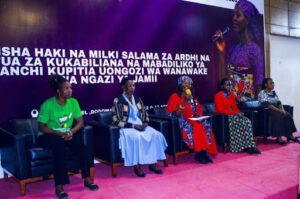
In response to these structural injustices, the Rural Women’s Assembly Zimbabwe (RWA Zimbabwe) continues to lead transformative community action to protect and promote women’s land rights across the country. Their work addresses both immediate community needs and long-term systemic reforms.
- Engaging Government and Policymakers
RWA Zimbabwe has been actively advocating for the finalization of the National Land Policy. The movement is calling for a gender-sensitive framework that guarantees equitable access to land and secures tenure for women in both communal and A1 villagized areas. - Policy and Legal Advocacy
RWA Zimbabwe is pushing for the alignment of the Mines and Minerals Act with agricultural and environmental legislation. The goal is to prevent mining operations from displacing farming communities and to ensure that land use prioritizes community needs over private profit. - Land for Her Campaigns
Through its “Land for Her” campaign, RWA Zimbabwe is mobilizing women to demand transparency and gender equity in land governance. The campaign works to expose corruption and illegal land sales, build legal literacy among women, and promote their participation in land allocation and policy processes. - Community Empowerment and Legal Education
Understanding that knowledge is power, RWA Zimbabwe simplifies and translates key land laws into local languages to make them accessible to grassroots women. This empowers them to challenge injustices, engage with institutions, and advocate for their rights with confidence.
Key Advocacy Messages and Demands
To address these challenges, RWA Zimbabwe is calling for the following urgent actions:
- Finalize the National Land Policy with inclusive provisions for communal land governance.
- Harmonize the Mines and Minerals Bill with land and environmental laws to protect agricultural land.
- Ensure transparent and fair land allocation, free from bribery, favoritism, and abuse.
- Enforce proper community consultation and compensation where mining disrupts livelihoods.
- Make land-related laws simple, translated, and accessible for effective grassroots engagement.
Zimbabwe’s land reform journey is far from complete. For it to be just, inclusive, and sustainable, it must center the rights, needs, and voices of women. RWA Zimbabwe remains committed to challenging inequalities and pushing for a future where rural women can claim, own, and govern the land they depend on. Land for her is land for all.