
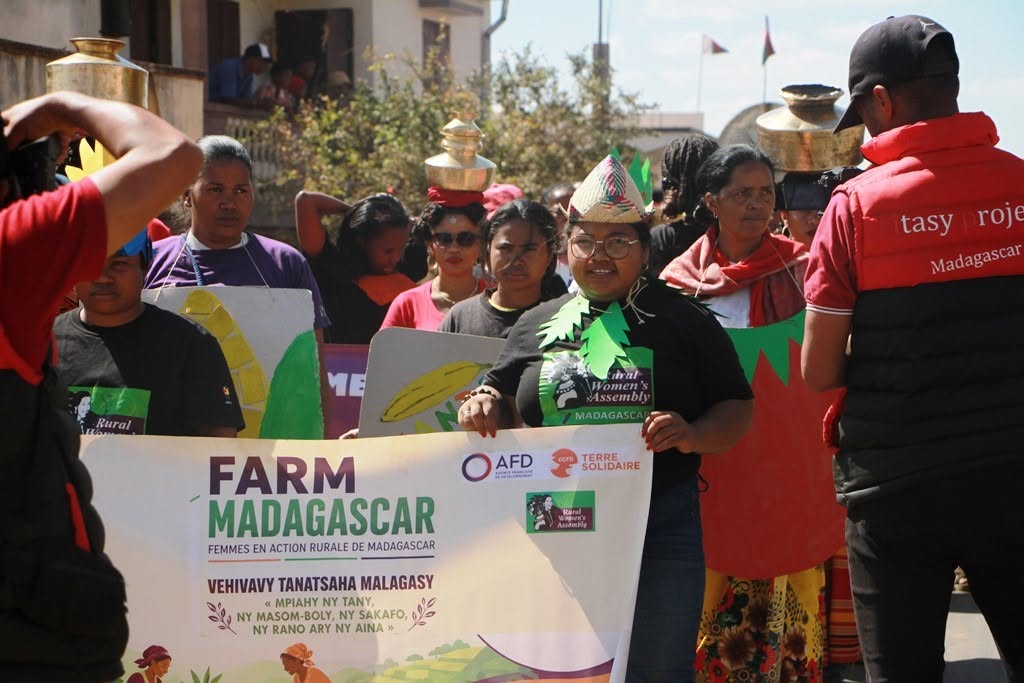
A Festival Rooted in Environmental Action
From 2 to 4 August 2026, the commune of Analavory hosted the fifth edition of the Ecology Festival, an event dedicated to environmental protection, the promotion of local initiatives and citizen mobilisation for more sustainable development.
Over the years, the festival has become an important space for dialogue, expression and the sharing of experiences around environmental issues. This fifth edition stood out because of its strong commitment to going beyond exhibitions and awareness raising by directly strengthening the knowledge and capacities of local communities.
Previous editions highlighted the importance of creating space for artistic expression, citizen demands, community initiatives, and the promotion of natural and cultural resources. This year, those dimensions remained central while being given a stronger learning and capacity-building focus. Participants were able to discover and promote different forms of environmentally focused artistic expression, share their experiences and voice their concerns.
Building Knowledge and Community Capacity
Special emphasis was placed on training and capacity building. The objective was clear: local communities should not merely be spectators in environmental debates. They should have the knowledge needed to understand their rights, defend their interests and participate meaningfully in decisions affecting their land and territories.
Several important topics were addressed during the festival. Climate change and climate justice featured prominently because of their growing impact on rural communities. Climate change directly affects livelihoods, agriculture, access to water and natural resources. Understanding it therefore means not only knowing its causes and consequences, but also recognising questions of justice, responsibility, vulnerability and access to resources and solutions.
The festival also included discussions and training on peasant rights and land rights. Land is one of the main foundations of rural livelihoods. Knowing one’s rights to land, understanding land-related processes and being able to defend one’s interests are essential for preventing conflict and strengthening land security.
Human rights were another important theme. Environmental protection and human rights are closely linked through the right to a healthy environment, the right to participate, the right to information, the right to land and natural resources, and the broader principles of dignity and equality.
Agroecology was also a major focus of the training sessions. In the face of climate change and the challenges experienced by producers, agroecology can contribute to more resilient agricultural systems that use resources efficiently and respond to local realities.
Free Training as an Investment in Local Development
One of the most important aspects of the fifth edition was that the training sessions were offered free of charge. Providing local residents, producers, women, young people and community actors with free access to knowledge is an important investment in local development.
An informed community is better able to participate in decision making, defend its rights, identify opportunities and develop solutions adapted to its own realities. The festival therefore became not only a space for celebrating ecology, but also a space for learning, dialogue and citizen empowerment.
Environment, Rights and Development: Interconnected Challenges
This edition also highlighted a fundamental reality: environmental protection cannot be separated from social and economic issues. When communities lose access to land, when natural resources are degraded, when water becomes increasingly difficult to access, or when climate change affects agricultural activities, people’s rights and livelihoods are also affected.
Environmental protection must therefore go hand in hand with the defence of human rights, the promotion of peasant rights, land security, the strengthening of communities’ economic autonomy and the promotion of sustainable agricultural practices.
Strengthening the capacities of women and young people is equally important. Women play an essential role in agriculture, food processing, natural resource management and household economies. Young people, meanwhile, are an important force for innovation, community mobilisation and the development of new solutions to environmental challenges. Giving both groups access to information and training helps strengthen their participation and their ability to become agents of change within their communities.
From Knowledge to Action
The real challenge after the festival is to transform the knowledge acquired into concrete action. Participants are encouraged to share what they have learned with their families, organisations and communities. Knowledge about rights, agroecology, climate and the environment should be translated into local initiatives, including improved agricultural practices, protection of natural resources, stronger citizen participation, prevention of land conflicts and the development of sustainable economic activities.
From this perspective, the Ecology Festival can become a starting point for more sustained community mobilisation. After five editions, the festival in Analavory demonstrates how environmental awareness can evolve into a more participatory approach that combines exhibition, awareness raising, advocacy, training and action.
By giving an important place to free training and capacity building, the festival helped bring major environmental issues closer to the daily realities of local communities. The challenge now is to maintain this momentum and ensure that the knowledge gained continues to have an impact beyond the three days of the festival.
Environmental protection does not depend only on institutions or organisations. It also depends on communities having the knowledge and confidence to understand their rights, respond to the changes affecting them, protect their resources and collectively build sustainable solutions. The 2026 Ecology Festival in Analavory was therefore much more than an event: it was a space for knowledge sharing, dialogue, mobilisation and the strengthening of environmental citizenship.


Pingback: RWA August 2026 Newsletter – Rural Women's Assembly