
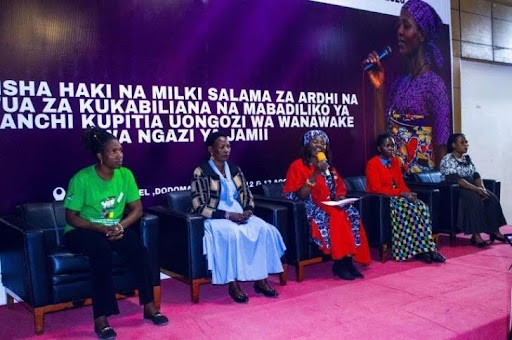
On August 12–13, 2026, LANDESA, through its “Stand for Her Land” campaign, organized a symposium at Morena Hotel in Dodoma, where the Tanzania Rural Women Assembly had the opportunity to participate. The symposium brought together a diverse range of stakeholders, including community representatives from 12 regions of Tanzania. The event also brought together government representatives from various ministries and departments, development partners, researchers, paralegals, and civil society organizations. The Tanzania Rural Women Assembly was represented by three rural women from Iringa and Arusha regions, who actively participated in the discussions and shared their experiences and perspectives on women’s access to and rights over land.
The symposium provided an important platform for dialogue among stakeholders on the opportunities, challenges, and practical solutions related to women’s access to and control over land. It also created an opportunity to raise awareness of women’s land rights, explore the barriers that limit women’s equal access to and benefits from land resources, and identify strategies to strengthen women’s participation in land governance and decision-making processes. Furthermore, the meeting generated practical recommendations aimed at promoting secure, equitable, inclusive, and sustainable access to land for women.
Therefore, the event significantly enhanced women’s knowledge and understanding of their rights to access, own, and control land. In addition, 16 women had the opportunity to receive legal support from paralegals on various issues, including land access and gender-based violence (GBV). The symposium also provided a platform for participants to identify and discuss key barriers preventing women from accessing and controlling land. These included cultural norms that view land ownership primarily as a responsibility of men, as well as limited knowledge of land laws, rights, and procedures. Identifying these challenges provided a strong basis for developing appropriate and practical interventions.
Finally, participants developed a set of practical recommendations for relevant stakeholders to address the identified challenges. These recommendations included strengthening community education and awareness on women’s land rights and increasing access to legal assistance to support women in acquiring and securing land rights


Pingback: RWA Southern Africa Newsletter – August 2026 Edition – Rural Women's Assembly