Southern Africa burns and drowns. As temperatures shatter records and unpredictable weather devastates landscapes, a stark reality emerges: women bear the brunt of the climate catastrophe. While contributing least to global emissions, they stand on the frontlines of its most brutal consequences watching ancestral fields turn to dust, navigating flooded homesteads, and mourning livestock that represent lifetimes of investment. In the Kingdom of Swaziland, where patriarchal structures intertwine with climate vulnerability, the Swaziland Rural Women’s Assembly (SRWA) is spearheading a radical movement a Feminists for Alternatives on Climate and Environment (FACE). This isn’t just adaptation; it’s a grassroots revolution reclaiming knowledge, land, and power.
The Crushing Weight of Crisis: Women on the Frontlines
The statistics are a grim drumbeat North Africa warms at 1.28°C above historical averages, the fastest rate on the continent. 68 million people across Southern Africa faced severe hunger following the recent El Nino-fuelled drought, the worst in living memory for regions like Zimbabwe. For rural women, these abstract numbers translate into backbreaking reality. They are the primary food producers, the water fetchers now walking ever-greater distances as sources dry up, and the caregivers straining under multiplied burdens when disaster strikes. Climate change acts as a threat multiplier, exacerbating existing inequalities, restricting access to resources like land and credit, and increasing vulnerability to gender-based violence.
Government responses often entrench dependency, funnelling expensive, corporate-controlled hybrid seeds and inputs that trap farmers in cycles of debt and undermine resilience built over generations. As one SRWA member starkly lamented during their People’s Summit, There’s really no such thing as the ‘voiceless’. There are only the deliberately silenced or the preferably unheard.
FACE: Cultivating Radical Alternatives, Rooted in Feminism
Against this oppressive backdrop, SRWA’s FACE program blooms not as a timid project, but as a declaration of self-determination. Rejecting top-down, corporate-driven solutions, FACE empowers three women-led collectives across Swaziland, embodying practical, radical alternatives:
1. Kukhanya Kwemalanti Women Group (Hhohho Region): reclaiming the sacred commons, In Hhohho, the women of Kukhanya Kwemalanti are engaged in radical ecological restoration. They are closing a degraded wetland, a vital act of resistance against the draining and destruction of these crucial ecosystems. Their work isn’t merely environmental, it’s deeply cultural and economic. Restoring the wetland means reviving medicinal plants critical for community health, often women’s domain. It means nurturing grasses essential for traditional mat weaving, providing sustainable income streams controlled by women. This is the reclamation of a commons a shared space and resource base managed sustainably by those who depend on it most, directly challenging extractive models.
2. Sihlobo Women and Youth Group (Lubombo Region): Art as Cultural Weaponry in the arid Lubombo region, Sihlobo harnesses the transformative power of art and storytelling. Through recycling projects, vivid drawings, poignant poetry, compelling drama, and communal storytelling, they forge a powerful narrative resistance against climate destruction. Their art isn’t decoration, it’s education, mobilization, and cultural preservation. It translates complex climate science into accessible local knowledge, challenges apathy, and builds solidarity. By using recycled materials, they physically embody the alternative economy of reuse and regeneration, directly confronting the wastefulness of the dominant system. Their creativity fuels awareness and ignites the collective imagination needed to envision a different future.
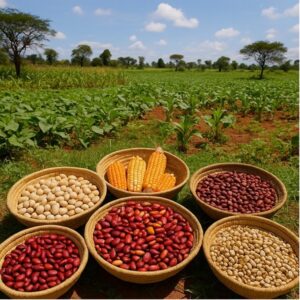
3. Sandlalesikhutsele Women Group (Shiselweni Region): seed sovereignty as liberation, perhaps the most foundational act of resistance is unfolding in Shiselweni. Here, the Sandlalesikhutsele women are building a community seed bank. This is far more than a storage facility it is a stronghold of solidarity and sovereignty. By collecting, preserving, and exchanging indigenous, drought and flood-resilient seed varieties, these women break free from the stranglehold of multinational seed corporations. As they gain lessons from sisters in the region like Zimbabwe and South Sudan, such seed banks are lifelines during crises, allowing communities to replant after devastating losses using locally adapted varieties. Selling seeds within their community also generates vital income controlled by the women. This work preserves biodiversity and traditional knowledge, safeguarding the genetic heritage that industrial agriculture seeks to erase.
Impacts of Climate Change on Women in Southern Africa
Climate change has disrupted livelihoods causing crop failure, livestock loss, reduced income from climate-sensitive activities like farming and resource gathering. It has also increased labor burden as it causes women to travel longer distances to fetch water/firewood and caring for climate-affected family members. another impact is food Insecurity which disproportionately impact on female-headed households causing malnutrition and diseases. Lastly, there is increased social vulnerability which perpetuates GBV, displacement, forced migration and loss of cultural practices.
Beyond Projects Challenging Power, Claiming Rights
The FACE program’s brilliance lies not only in its practical projects but in its integrated feminist and political analysis. SRWA understands that true resilience requires dismantling the systems that created the vulnerability in the first place. Therefore, FACE is coupled with a vigorous political education and advocacy campaign.
SRWA is actively educating her leaders and communities about the United Nations Declaration on the Rights of Peasants and Other People Working in Rural Areas (UNDROP). This crucial instrument recognizes peasants’ rights to land, water, seeds, biodiversity, food sovereignty, and a means of livelihood directly challenging the neoliberal policies that enable land grabs and corporate control of agriculture. SRWA is demanding that Swaziland adopt and implement UNDROP, providing a legal and policy framework to protect rural communities and women’s rights.
Furthermore, SRWA consistently confronts patriarchal power structures, including within traditional governance. They have boldly spoken out against gender-based violence and the abuse of power by leaders who should be protectors, demanding accountability and systemic change. This fearless advocacy underscores that climate justice is inseparably linked to gender justice and political freedom.
Radical Hope Rooted in Reality
The initiatives of Kukhanya Kwemalanti, Sihlobo, and Sandlalesikhutsele are not mere survival tactics. They are blueprints for a just transition. They demonstrate that solutions exist, not in distant boardrooms or technocratic fixes, but in the knowledge, solidarity, and agency of women rooted in their communities and ecosystems. They prove that food sovereignty, not corporate-controlled food systems, is the path to true resilience. They show that cultural expression is vital for mobilization and healing. They affirm that ecological restoration is fundamental to community well-being.
Pillars of the FACE Program’s Radical Alternative
- Ecological Regeneration- wetland restoration (Kukhanya Kwemalanti) will promote health, biodiverse commons managed collectively
- Cultural Resistance- Art, drama, storytelling (Sihlobo) will raise awareness, mobilise and reclaim narative
- Seed & Food Sovereignty- Indigenous seed banking (Sandlalesikhutsele) which will resist control from genetic resources
- Political Empowerment- UNDROP Education & Advocacy (SRWA) which encompasses legal recognition of rural people’s rights and equality
The path is demanding. These women confront the colliding crises of patriarchy, capitalism, and climate chaos, often with minimal resources and against entrenched power. Yet, their stubborn optimism, grounded in action and solidarity, offers the most powerful form of radical hope. As the world gears up for another climate summit, the message from Swaziland rural women is clear “The future isn’t forged in conference halls; it’s being seeded in restored wetlands, painted on recycled canvases, and stored in community seed banks by the hands of those who have everything to fight for. Supporting their revolution isn’t charity but is essential for any viable future on this continent and this planet. The time to listen, to amplify, and to stand with the FACE of climate resistance is now.