In Alfa Alfa, a small rural settlement in Bubi District, Matabeleland North, land is more than a resource, it is life. For generations, women here have tilled the soil, grazed cattle, and harvested crops to feed their families and support their households. But in recent years, this lifeline is being ripped away. Chinese mining companies, operating with unclear permits and backed by politically connected elites, have invaded communal land, turning once productive farmland into vast, open-pit mining sites. These operations have devastated the environment and displaced rural women with no compensation, no support, and no say in the decisions being made about their land. The attached images below show a glaring example of the damage left behind after unregulated mining activity. What was once fertile ground is now a hazard to humans and livestock. “We were never consulted,” says Mrs Ndlovu, a 64-year-old woman who has lived in Alfa Alfa all her life. “One day they just started digging. Our crops were destroyed. Our cattle no longer have grazing land. We are losing our land”.
Indeed, women in the area say the mining companies arrived without warning, explanation, or consent. They fenced off communal lands that have sustained generations, guarded them, and began operations with no regard for local livelihoods. The land that once provided food and income now poses deadly risks. “Cattle are falling into the pits. Children can’t play freely anymore. Our boreholes are drying up, and the water that remains is dirty and polluted with cyanide,” adds Sibongile, a young mother and community member. “This is not development—it is destruction.”
The environmental impact is disastrous. Streams have been contaminated with mining chemicals. Indigenous trees sources of firewood, medicine, and shade have been uprooted. Livestock are dying after drinking from poisoned watering holes. In areas like Bubi, land tenure systems are deeply rooted in tradition, and rural women rely on customary access to land. Yet their rights are rarely recognized or documented in formal law. While Zimbabwe’s Constitution affirms women’s right to land, in practice these rights are ignored when investors come knocking. Deals are negotiated in secret often between mining companies, traditional leaders, and government officials excluding the very communities whose futures are at stake.
Corruption fuels the crisis. Local leaders have been accused of accepting bribes cash, or empty development promises in exchange for signing away land. Infrastructure improvements like roads and clinics never materialize. Instead, what Alfa Alfa has received is displacement and environmental collapse.
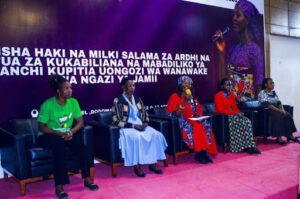
But amid the loss, Rural Women’s Assembly (RWA) is rising. The women of Alfa Alfa are no longer watching silently as their land is taken. They are organizing. RWA is building solidarity among rural women farmers in Bubi. Through training workshops, legal literacy, and community dialogues, women are learning to understand their land rights, document dispossession cases, and challenge extractive operations that threaten their lives. “We will not be moved again,” says Mrs Dube, a local RWA women . “We are organizing ourselves to challenge these illegal evictions. This land belongs to us. We were born here. Our mothers farmed here. We will not be pushed into poverty by people who don’t even speak our language.”
Recently, women under RWA in Alfa Alfa have submitted petitions to local authorities, demanded environmental inspections, and presented evidence at public meetings. Legal support has helped them report violations, and their advocacy has led to one Chinese company drilling a borehole as partial compensation. However, the women say this is a token gesture and does not begin to replace the land and livelihoods they have lost. However, speaking out remains dangerous. Some women have been threatened and intimidated for resisting. The presence of powerful investors makes enforcement of environmental and land laws difficult. Still, the women continue fueled by pain and deep love for their land.
The struggle in Alfa Alfa is not isolated. Across Zimbabwe, rural communities are being pushed aside in the race for foreign investment. Policies on communal land remain unclear and poorly enforced. Environmental protections are weak. And rural women the backbone of the country’s agricultural economy are being excluded from decision-making processes that directly affect them. Yet the women of Alfa Alfa, through RWA, are rewriting the narrative. They are demanding development that is inclusive, fair, and just not imposed through force and exploitation. Their resistance is not simply a cry for help; it is a clear and powerful call for accountability, land justice, and the protection of rural women’s rights.