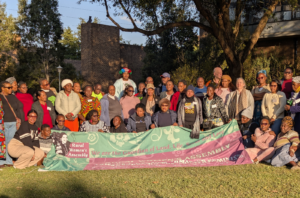
As the Rural Women’s Assembly (RWA) we speak with urgency grounded not only in statistics, but in lived realities. Across Southern Africa, the climate crisis is not an abstract future threat, it is the daily experience of women watching their crops fail, their homes flood, and their families pushed deeper into uncertainty. This is a lived reality, intensifying year after year and overwhelming the lives of rural women and their families. Across Southern Africa and the wider globe, every harvest season feels shorter, every storm season feels harsher, and every dry spell feels longer. The world has just witnessed some of the warmest years on record, with heat extremes, droughts, and wildfires becoming more frequent and intense even in places where such events were once rare.
Since late 2025 and into 2026, Southern Africa and the Indian Ocean region have experienced a brutal chain of climate shocks. Torrential rains have triggered catastrophic flooding across parts of Mozambique, Zimbabwe, South Africa, and Eswatini, destroying homes, crops, roads, and livelihoods. Communities already weakened by drought now confront devastating floods, illustrating the cruel whiplash of climate extremes. In Madagascar and Mozambique, the crisis has taken an even more violent form. Tropical Cyclone Fytia, striking at the end of January 2026, tore through communities, destroying homes, submerging agricultural land, and displacing thousands of families. Before recovery was even possible, Intense Tropical Cyclone Gezani followed in February 2026 with destructive winds and severe flooding, compounding devastation across already traumatised regions
For rural women, this continuous and escalating crisis is measured in missed meals, lost seeds, homes swept away by floods, livestock that cannot survive the heat, and children kept home from school because travel is unsafe or water has run dry. When a cyclone tears through a community for the second time in as many seasons, there is no “before” to return to. When every year brings unprecedented heat waves, there is no “normal” left to adapt back to. The intensification of climate impacts is overwhelming because it is relentless. Last season’s drought dries the soil that was never fully replenished after the floods. This season’s heat waves sap strength, erode health, and shrink opportunities. The next disaster whether flood, cyclone, fire, or storm happens closely immediately behind the last. With global temperatures climbing and extreme weather patterns worsening each year, communities are trapped in a cycle where recovery becomes a dream and survival a daily burden.
We re-emphasize that the crisis is not natural randomness. It is evident that it is a direct consequence of decades of unchecked emissions, extractive development, and policies that have placed profit and power over people and the planet. We, as rural women are not mere sufferers; we are frontline responders, caregivers, negotiators, farmers, and defenders of their communities. Yet we are often excluded from the planning and resources needed to protect our own lands and families.
We declare: Polluters must Pay! We demand reparations! We demand;
1. Climate Finance & Accountability
- Fulfil binding and predictable climate finance commitments agreed globally.
- Establish direct, accessible funding channels for grassroots women-led and community-centric climate action.
- Finance reparations for Loss & Damage rooted in real community loss and suffering.
- Hold major polluters accountable for historical emissions.
2. Early Warning, Preparedness & Response
- Invest in effective early warning systems that combine scientific forecasting with community knowledge.
- Develop local disaster preparedness plans with women at the center of planning and implementation.
- Create community emergency resource banks (seeds, food, water, medicine, shelter materials).
- Ensure safe, gender-responsive evacuation shelters and protection mechanisms for vulnerable groups.
3. Food Sovereignty & Agroecology
- Strengthen community seed banks and diversify seed systems with climate-resilient, indigenous varieties.
- Support agroecological practices that build soil health, water retention, and climate adaptation.
- Prioritize research and extension services that respond directly to women farmers’ lived needs.
4. Land, Resource Rights & Structural Justice
- Guarantee land tenure, resource rights, and decision-making authority for rural women.
- Reject climate solutions that facilitate land grabbing, enclosures, or commodification of nature.
5. Inclusive Governance
- Make rural women equal partners and not token participants in climate policy spaces from local councils to global forums.
- Ensure climate action planning is gender-responsive and culturally relevant.
- Support community-led monitoring, evaluation, and accountability mechanisms.