For rural women farmers in Zimbabwe, climate change is no longer a distant threat. Changing rainfall patterns, prolonged dry periods, rising temperatures, and unpredictable weather are increasingly affecting agricultural production, food security, and household livelihoods. For women who depend on farming for food and income, the impact of climate change is felt not only in the fields but also after harvest, when valuable produce can be lost due to inadequate storage and preservation.
In Goromonzi District, women farmers have traditionally faced significant post-harvest losses, particularly of fruits, traditional vegetables, herbs, and other perishable produce. Much of what they produce can spoil before it is consumed or sold, resulting in food waste, lost income, and reduced household food security. These challenges are further compounded by climate change, which continues to place pressure on rural food systems and livelihoods.
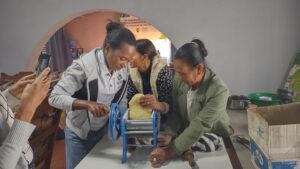
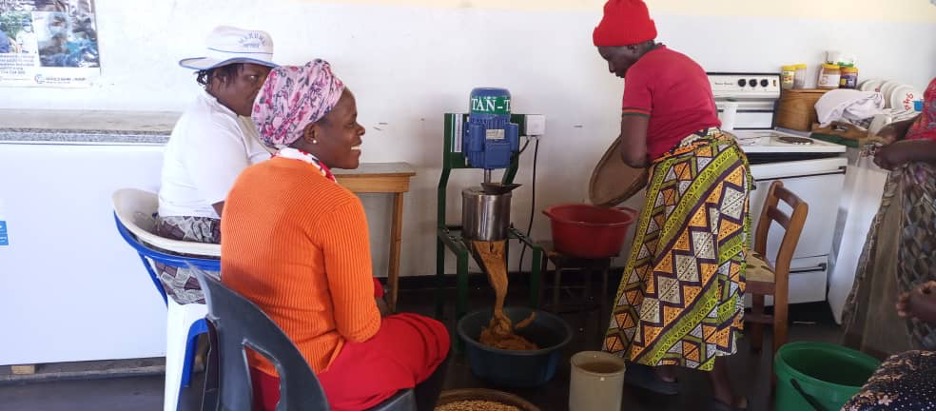
Through the Wadzanai Community Development Trust (WCDT) Value Addition Initiative, women farmers are learning practical ways to respond to these challenges and strengthen their resilience. Through the WCDT Innovation Hub, women are being equipped with skills in climate-smart solar drying, peanut butter production, food hygiene, packaging, and marketing. These skills are enabling them to preserve surplus produce, reduce waste, and make better use of locally available agricultural resources.
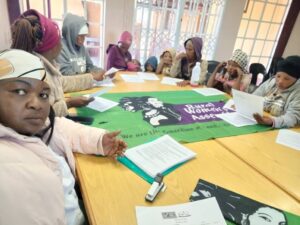
One of the women benefiting from this initiative is Lizzy Gonyei, a farmer, Village Head, and member of the Rural Women’s Assembly (RWA) in Mungate Village, Ward 4, Goromonzi District. As both a community leader and farmer, Lizzy has experienced first-hand the challenges that rural women face in maintaining their livelihoods in a changing climate.
Before participating in the initiative, Lizzy often lost a significant portion of her harvest because she did not have adequate knowledge and skills to preserve her produce. Fruits, vegetables, and herbs would spoil before they could be consumed or sold. This meant that the time, labour, and resources invested in producing food were often lost.
“Before joining the WCDT Innovation Hub, I used to lose a lot of my harvest because I could not preserve it,” Lizzy explains. “Now I dry mangoes, vegetables, and herbs properly, and I can sell them even out of season.”
The knowledge Lizzy gained has changed the way she manages her harvest. Through solar drying and other value-addition practices, she is now able to preserve fruits, traditional vegetables, herbs, and other locally produced foods for longer periods. Instead of losing surplus produce during periods of abundance, she can process and store it for future consumption or sale.
For Lizzy, this work is also connected to the protection of local food heritage and seed sovereignty. Many of the traditional vegetables and crops grown by rural women are part of indigenous food systems that have been passed down through generations. By continuing to grow, preserve, consume, and promote these foods, women are helping to keep traditional knowledge and local food practices alive.
The preservation of indigenous and locally adapted crops is particularly important in the face of climate change. Rural women have long relied on local knowledge to select crops that are suited to their environments and changing conditions. By valuing local food diversity and making better use of available produce, women are contributing to more resilient and sustainable food systems.
Value addition has also created new opportunities for Lizzy to generate income. In addition to drying agricultural produce, she has learned how to make peanut butter, creating another source of income for her household. Skills in food hygiene, packaging, and marketing have helped her improve the quality and presentation of her products and explore opportunities to sell them beyond the immediate harvesting season.
The income generated from these activities is helping Lizzy meet important household needs, including buying food and paying school fees. She is also able to reinvest some of her earnings into her farming activities. In this way, value addition is helping her turn agriculture into a more sustainable livelihood while strengthening her household’s ability to cope with economic and climate-related challenges.
Lizzy’s impact, however, goes beyond her own household. As a Village Head and RWA member, she is sharing the knowledge and skills she has gained with other fellow RWA women in her community. She encourages them to reduce post-harvest losses, preserve their harvests, value indigenous foods, and explore opportunities to add value to locally produced crops.
Through peer-to-peer learning, Lizzy is helping other rural women understand that they can make better use of their harvests rather than allowing valuable food to go to waste. She shares her experiences in solar drying, food preservation, value addition, and marketing, while encouraging women to learn from one another and strengthen their collective knowledge.
This sharing of knowledge is helping to build a stronger network of rural women who are developing practical solutions to climate change and food insecurity. It also reflects the strength of the RWA movement, where women learn from each other, share knowledge, and collectively promote sustainable and resilient food systems.