The unfolding events in South Africa should concern every African. Images of frightened families fleeing their homes, businesses being abandoned, children missing school, and communities turning against one another remind us that when fear is allowed to replace humanity, the consequences are devastating. Across several parts of South Africa, the anti-immigrant campaign has created an atmosphere where many foreign nationals whether legally documented or not are increasingly living under constant fear of intimidation, violence and displacement. This is no longer simply a debate about immigration policy it has become a question about human dignity, constitutional rights and the future of African unity.
The Swaziland Rural Women’s Assembly (SRWA) recognizes that South Africa, like many countries across the continent, faces genuine socio-economic challenges. High unemployment, poverty, inequality, rising crime and pressure on public services are realities that cannot be ignored. South Africans have every right to demand accountable leadership, efficient border management and an immigration system that is transparent and lawful. Every sovereign nation has the responsibility to regulate who enters its borders and under what conditions.
However, there is a fundamental difference between demanding effective immigration management and targeting people simply because they are foreigners. When individuals begin deciding who belongs in a country based on appearance, accent or nationality, the rule of law is replaced by mob justice. That is a dangerous path for any democracy.
What is particularly worrying is that the fear has spread beyond undocumented migrants. Reports indicate that many foreign nationals with valid work permits, residence permits, refugee documentation and legal status are also being harassed or threatened. Businesses owned by foreign nationals have been forced to close, families have sought refuge in temporary shelters, and thousands have considered returning to their home countries out of fear rather than choice. This demonstrates that xenophobia rarely distinguishes between those who are documented and those who are not. Once hatred is normalized, legality often becomes irrelevant.
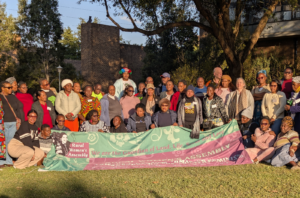
As an organisation representing rural women in Eswatini, SRWA understands the realities of migration. Thousands of emaSwati have lived, worked and studied in South Africa for generations. Many families on both sides of the border depend on cross-border employment, trade and education. The economic relationship between Eswatini and South Africa has never been one-sided. South African businesses operate successfully throughout the region while neighboring countries contribute labor, skills, entrepreneurship and trade that support South Africa’s own economy.
African economies are interconnected. When instability affects one country, neighboring countries inevitably feel its impact. If foreign-owned businesses are destroyed, regional trade suffers. If workers are displaced, families across Southern Africa lose income. If fear spreads across borders, investment and tourism decline. Xenophobia therefore becomes more than a domestic issue it becomes a regional development challenge.
Women and children bear the greatest burden during such crises. Rural women who have crossed borders to seek employment as domestic workers, farm workers, caregivers or informal traders frequently become the first victims of intimidation. Many are single mothers supporting families back home. When they lose employment or are forced to flee, entire households lose their primary source of income. Children are uprooted from schools, healthcare is interrupted and already vulnerable families are pushed deeper into poverty.
SRWA believes that leadership matters during moments like these. Political leaders, traditional leaders, civil society, churches, trade unions and community organizations all have a responsibility to reject language that dehumanizes fellow Africans. When migrants are routinely blamed for unemployment, crime or poor service delivery without evidence, frustration can easily be redirected toward innocent people instead of addressing the structural causes of those problems.
History should also serve as our teacher. South Africa has experienced waves of xenophobic violence before, leaving lives lost, businesses destroyed and communities divided. Each episode has damaged the country’s international reputation and weakened the spirit of African solidarity that helped sustain South Africa during the struggle against apartheid. Many African nations, including Eswatini, stood with South Africans during difficult times. That shared history should remind us that Africa’s strength has always rested in unity rather than division.
This does not mean governments should ignore illegal immigration. SRWA supports lawful, transparent and accountable immigration systems. Border management must be strengthened. Corruption within immigration authorities must be eliminated. Employers who exploit undocumented workers should be held accountable. Immigration laws should be enforced fairly and consistently. But enforcement must always be carried out by lawful institutions not by vigilante groups or angry crowds.
SRWA calls upon all governments within Southern Africa to protect the rights of their citizens while also encouraging lawful migration and respect for host-country laws. At the same time, South African authorities must ensure that every individual within its borders regardless of nationality is protected from violence, intimidation and unlawful discrimination.
Africa cannot build prosperity while Africans fear one another. The continent cannot speak confidently about integration through the African Continental Free Trade Area while hatred against fellow Africans grows within our communities. Economic progress requires stability, trust and cooperation across borders.
As rural women, we know that communities become stronger not by excluding others but by creating opportunities that uplift everyone. Poverty is not defeated by attacking the vulnerable. Unemployment is not solved by hatred. Crime is not eliminated through collective punishment. Sustainable solutions require good governance, inclusive economic growth, and investment in local industries, youth employment, skills development and accountable public institutions.
The Swaziland Rural Women’s Assembly therefore calls for calm, dialogue and respect for the rule of law. We stand against all forms of xenophobia, violence and discrimination. We equally support lawful immigration management that protects national security while preserving human dignity. Our message is simple: every African deserves safety, dignity and justice. Borders may define states, but humanity defines us all. Let us protect our sovereignty without sacrificing our Ubuntu. Let us solve our challenges through law rather than fear, through leadership rather than intimidation, and through African solidarity rather than African division.