The Rural Women’s Assembly (RWA) Zimbabwe proudly participated in the 15th Meeting of the Conference of the Contracting Parties (COP15) to the Ramsar Convention on Wetlands, held in Victoria Falls from 23 to 31 July 2025. This historic event, attended by over 2,000 delegates, provided a critical platform for governments, civil society, Indigenous peoples, and grassroots movements to shape the future of global wetland conservation.
For RWA Zimbabwe, COP15 was not just about international negotiations it was about amplifying the voices of rural women who are the custodians of water, land, seed, and life. Two women from RWA Zimbabwe participated in a side event where they submitted the movement’s demands for inclusive and gender-responsive wetland restoration. Their presence ensured that grassroots women’s realities and knowledge informed discussions that are often dominated by governments and technical experts.
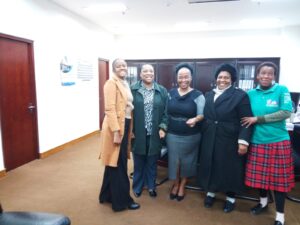
RWA Women at Cop 15 side event (Left: Tafadzwa Middle- Siphelani Kwaramba, Right- Gloria Makahwi)
RWA Zimbabwe’s Demands at COP15
At the side event, RWA Zimbabwe emphasized that women are central stakeholders in the protection and restoration of wetlands and biodiversity. Women manage water sources for households, safeguard traditional seeds, and sustain agricultural practices that depend on healthy ecosystems. However, despite their critical roles, women are often excluded from decision-making spaces.
Among the participants was Siphelani Kwaramba from Bikita, who played an active role in the side event. In her intervention, she strongly emphasized that women should be supported and recognized as key sources of Indigenous Knowledge Systems (IKS) in the management and sustainable use of wetlands and other natural resources. Her contribution underscored RWA’s conviction that restoring wetlands requires not only scientific expertise, but also the traditional knowledge and lived experiences of rural women.
The delegation’s key demands included:
- Recognition of women as primary stakeholders in the restoration and governance of wetlands and biodiversity.
- Inclusion of women in decision-making platforms, from community to national and international levels.
- Support for women’s knowledge systems and agroecological practices, which contribute to sustainable wetland management.
- Access to resources, financing, and training to empower women as leaders in wetland restoration.
RWA Zimbabwe stressed that women are the true change makers in wetlands management. Their leadership, grounded in both traditional knowledge and daily lived experiences, ensures that wetlands are not only restored but also sustained for future generations. By placing these demands before international audiences, RWA reinforced the message that without women’s participation, efforts to restore wetlands and halt biodiversity loss will not succeed.
Outcomes of Ramsar COP15
RWA Zimbabwe’s participation took place against the backdrop of historic decisions made at COP15. Among the most notable outcomes were:
1. Adoption of the Fifth Strategic Plan for Wetlands (2025–2034)
This 10-year plan sets an ambitious agenda to halt and reverse wetland loss globally by 2034. It emphasizes the “wise use” of wetlands, inclusive governance, and the integration of Indigenous and community knowledge. Importantly, the plan explicitly promotes gender equity and intergenerational approaches, aligning with RWA’s calls for inclusive conservation.
2. The Victoria Falls Declaration
This declaration, unanimously adopted by the Parties, reinforced political will to protect wetlands as nature-based solutions to climate change, biodiversity loss, and water insecurity. It called for greater resource mobilization and financial investments, including new mechanisms to support wetland protection and restoration in developing countries.
3. Resolutions and Commitments
Thirteen draft resolutions were adopted, covering a wide range of priorities:
- Wetland restoration through strengthened national policies and laws.
- Integrated management, linking wetlands to climate policies and disaster risk reduction.
- Monitoring and data collection to guide evidence-based conservation.
- Species conservation, including migratory birds and other wetland-dependent species, with the establishment of the Global Waterbird Estimates Partnership.
These outcomes collectively signaled a renewed global commitment to halt wetland loss and restore ecosystems by 2034.
Lessons for RWA and Rural Women
RWA Zimbabwe’s engagement at COP15 reinforced several lessons for grassroots women’s movements:
- Women’s knowledge is essential for wetland restoration and biodiversity conservation. Global strategies must recognize and integrate local practices, such as traditional water harvesting and seed preservation.
- Participation leads to influence: By being present, RWA women ensured that gender and equity were highlighted in international resolutions.
- Local struggles connect to global agendas: The Ramsar Convention’s outcomes align with RWA’s advocacy for food sovereignty, climate justice, and ecological protection.
- Solidarity strengthens movements: Building alliances with other African and global women’s movements amplified RWA’s voice and visibility.
- Zimbabwe showcased leadership: Hosting COP15 successfully highlighted Africa’s central role in wetland governance, positioning the region as a model of cooperation and innovation.
Conclusion
The Ramsar COP15 in Victoria Falls marked a turning point in global wetland conservation. For RWA Zimbabwe, it was also a moment of affirmation that rural women are not just victims of climate and ecological crises they are leaders, knowledge holders, and guardians of life.
Through their participation, RWA women brought the realities of grassroots communities into global policy spaces. With powerful voices like Siphelani Kwaramba’s, they demanded recognition, inclusion, and resources, underscoring that wetland restoration cannot succeed without women’s leadership and Indigenous Knowledge Systems.
Above all, RWA reminded the world that women are the change makers in wetlands management. Their leadership is the foundation for building a sustainable and just future where wetlands, biodiversity, and communities thrive together.
Some of the pictures
Left side – Minister of Environment standing with Siphelani Kwaramba (RWA Member) in preparation of the side event