

Context
In January 2026, the Rural Women’s Assembly (RWA), initiated an evidence-based field assessment to determine the scale and impact of flooding on women farmers in Limpopo Province. The assessment followed prolonged and intense rainfall between December 2025 and January 2026, which resulted in widespread flooding across rural areas of the Mopani District. Initial reports from RWA members indicated significant losses to agricultural production, farming infrastructure, and household livelihoods. The January 2026 assessment involved on-site visits to affected communities to document the extent of damage to crops, land, irrigation systems, farming equipment, and access infrastructure. Information was gathered directly from women farmers through structured observation and testimony to establish verified estimates of loss and priority needs
Case Study 1: Nora Mlondobozi – Priska Village, Limpopo
Listen to Nora narrate her experience
My name is Nora Mlondobozi. I am from Davano Fresh Produce Cooperative, a member of the Rural Women’s Assembly and the Mopani Farmers Association. From December 2025 until mid-January 2026, our area experienced extremely heavy rainfall that led to severe flooding. We are not used to rain in Limpopo, and I remember the floods of 2000, but this time it was completely different. The volume and force of the water were far beyond anything we have experienced before. The destruction has been devastating.
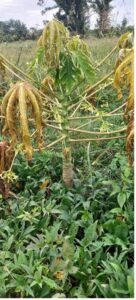
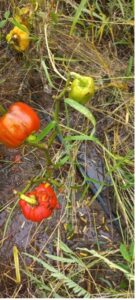
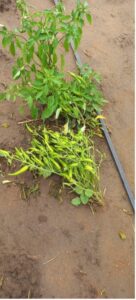
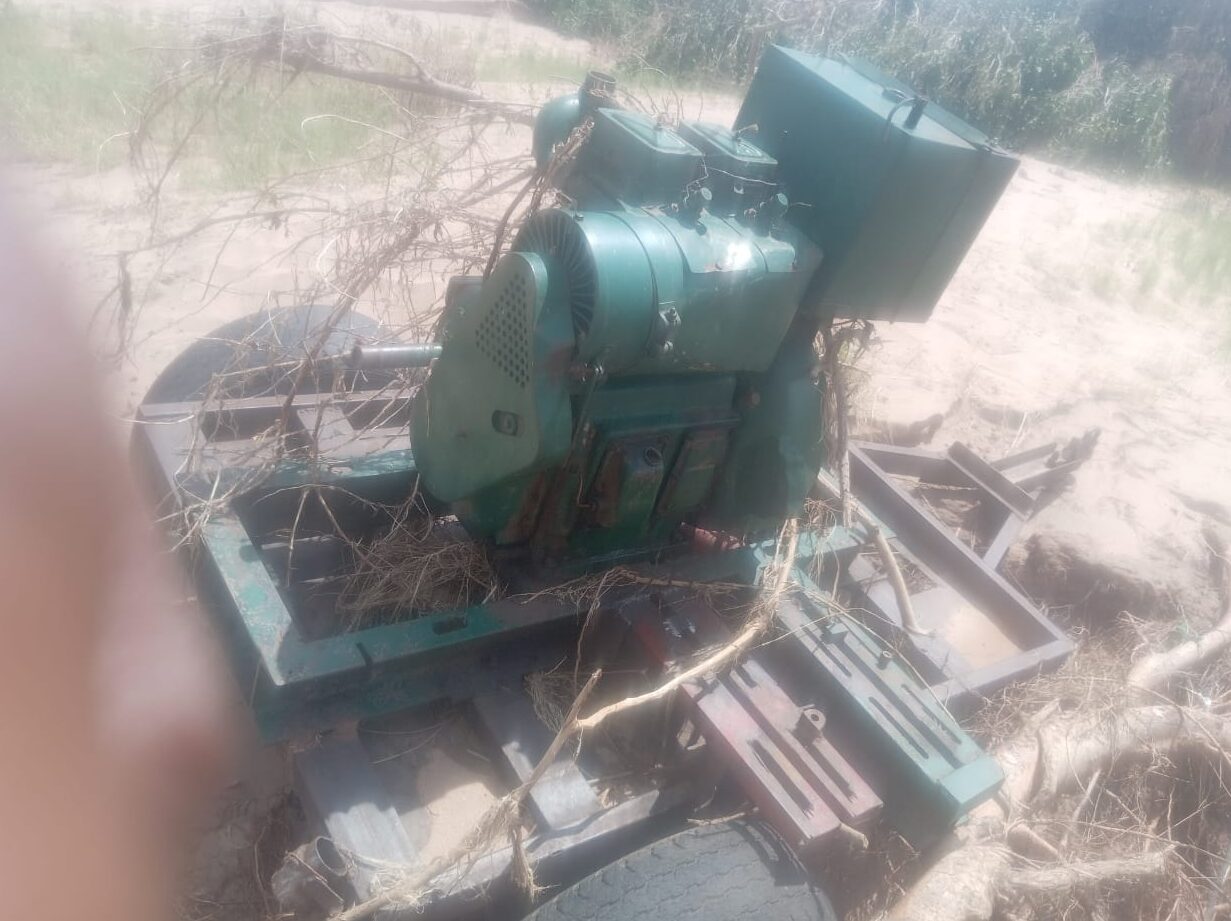
On my farm, the water was flowing like a river. The topsoil was completely swept away, leaving the land bare and damaged. I lost all my crops, including one hectare of maize, two hectares of lima beans, one hectare of butternut, one hectare of chillies, and half a hectare of beetroot and sweet potatoes. Everything was washed away. In addition to the crops, my 11-kilowatt electric motor, which I use to pump water from the borehole, was completely submerged under water. Because it is an electric motor, I am not sure if it will still be functional. This motor is critical to my farming operations, and without it, irrigation is impossible.
Access to my farm has also become a major challenge. The road infrastructure was destroyed, and both bridges that allow entry to my farm, from the eastern and western sides, were washed away. At the moment, it is very difficult to reach the farm, although some work is being done to try and restore access. The total loss I have incurred, including crops, infrastructure, and the motor, is estimated at approximately R280,000. This loss has placed my livelihood and future farming activities at serious risk.

Case Study 2: Jannet Tshulani Tivani – Muxiyani Village, Limpopo
My name is Jannet Tshulani Tivani. I am the founder of Tshulani, a member of the Mopani Farmers Association and the Rural Women’s Assembly. I live and farm in a deeply rural area.
I am deeply concerned because of the losses I have suffered due to the floods. At this moment, I do not know where to start or where to go. My house is surrounded by water, and my farm is also flooded. The heavy rains have left my seedlings submerged, and many of them have already rotted.
All my seedlings and fruits have been destroyed. The damage includes total crop loss, no access to the farm due to road damage, and severe soil degradation. The topsoil has been damaged and now urgently needs manure to restore fertility.
I am also running out of food crops such as maize, okra, watermelon, and pumpkin, which were meant to sustain my household and support my income. The estimated loss is R120,000.
I am pleading for assistance from anywhere. Anything can help. I ask for support so that I can recover and continue farming. Thank you in advance to those who can assist me and my farm.
This is from Muxiyani village
Case Study 3: Makhubele Vukosi – Between Thambi and Daniela, Limpopo
My name is Makhubele Vukosi. I farm at an agroecology centre located between Ndgambi and Daniel
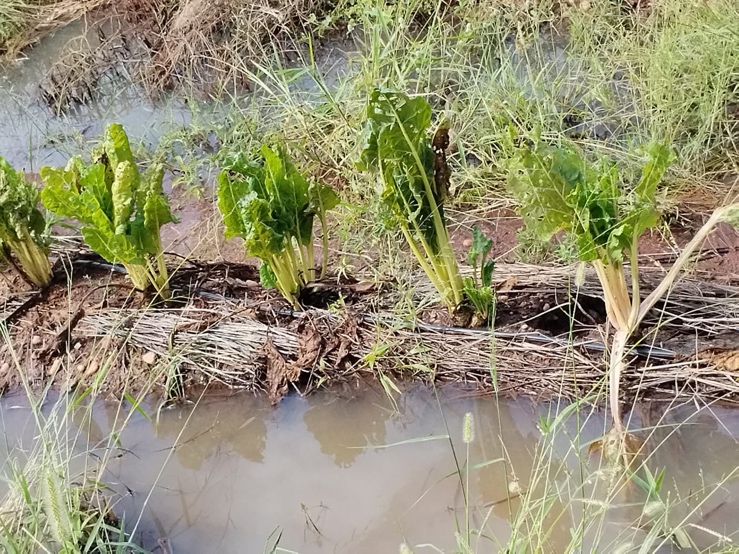
Due to the floods, I lost all my crops. The water destroyed buckwheat, kale, spinach, sunflower, sugar beans, cucumbers, melons, African pumpkin, beetroot, watermelon, and maize. Every crop I had planted was affected.
The floods wiped out months of work and investment. The estimated cost of the damage is R30,000. This loss has made it very difficult for me to continue with my farming activities and meet my basic needs.
Case Study 4: Mylike Ramathlo – Khaxane Village, Limpopo
My name is Mylike Ramathlo from Khaxane Village. I am part of the Khwezi Lihlabile Youth Cooperative.
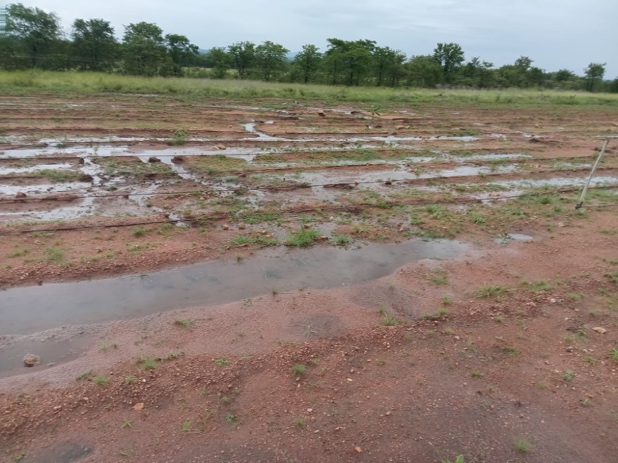
As a cooperative, we suffered significant losses due to the floods. We lost our chillies and green beans, which were planted on one hectare of land. In addition to crop losses, the roof and shed used for farming activities were damaged by the heavy rains and strong water flow.
The destruction of both crops and infrastructure has affected our ability to operate as a cooperative and support young farmers. The estimated total loss is R40,000.
Case Study 5: Ngobeni Tsakani Josephine – Mahale Village, Limpopo
Good day. My name is Ngobeni Tsakani Josephine. I am a member of the Mopani Farmers Association and the Rural Women’s Assembly, based in Mahale Village.
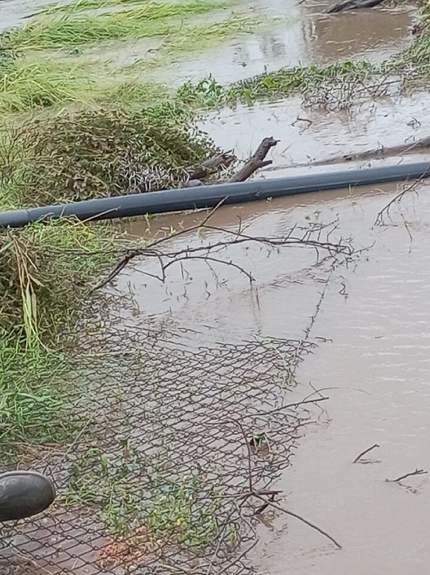
I am asking for help because I lost almost everything due to the floods. I lost two water pumps, which together cost R60,000. I also lost irrigation pipes of different sizes, 80, 65, 50, and 40, as well as drip lines, costing approximately R65,000.
In addition, I lost okra seeds, tomato seedlings, and serrano chilli seedlings, valued at R25,000. My fence and poles were washed away, costing another R30,000. I also had a small backup water pump, which I used when water was insufficient due to heat and distance. That pump cost R10,500, and it was also lost.
The floods left sand covering my gates and large parts of my land. When you look at the pictures, you can see how everything is buried. I lost everything. I have nothing left at the moment.
I was expecting to earn R250,000 from my seedlings, but now I will not get even a cent because there is nothing left. My heart is bleeding. I am broken and I do not know what to do. I cannot even restart because I no longer have seeds. I was depending on those seedlings to give me some income, but now I am left with nothing. I am asking for help, please. Thank you.
Case Study 6: Tammy Constance Mbodi Palawbeni – Outskirts of Giyani Township, Limpopo
My name is Tammy Constance Mbodi Palubeni. I live on the outskirts of Giyani Township. I am a member of the Mopani Farmers Association and the Rural Women’s Assembly, and I am a farmer.
I had ploughed three hectares of land, but all my crops were swept away by the floods. The water passed directly through my farm, eroding everything. As you can see from the pictures, nothing was spared.
I lost maize meal, cowpeas, pumpkins, groundnuts, and peanuts. Everything I had planted was destroyed. Now that the water has receded, we are trying to begin planting again, but it is very difficult because of the losses.
The estimated loss from the floods is R8,000. Even though the amount may seem small compared to others, this loss has had a serious impact on my household and my ability to continue farming.
Impact Report
Flood Impacts on Women Farmers in Limpopo Province, South Africa (2025–2026) based on the evidence provided:
Nature and Extent of the Impact
The floods caused severe and multi-layered damage, including:
- Total crop losses across staple foods (maize, cowpeas, pumpkins), vegetables (spinach, kale, beans, chillies), and cash crops.
- Topsoil erosion and land degradation, leaving fields bare and unsuitable for immediate replanting without rehabilitation.
- Damage and loss of irrigation infrastructure, including electric and manual water pumps, pipes, drip lines, and borehole systems.
- Destruction of farming infrastructure, such as sheds, roofs, fencing, and gates.
- Loss of access to farms due to washed-away roads and bridges, preventing farmers from reaching their land or transporting produce.
Reported direct financial losses across the six case studies exceed R500,000, excluding projected income losses from future harvests, such as one farmer’s expected R250,000 seedling income that was completely lost.
The impacts have disrupted household food security, income generation, and the ability to resume farming activities, placing women farmers at high risk of prolonged livelihood insecurity.
Immediate and Medium-Term Needs
Immediate needs identified through the assessment include:
- Emergency support for seeds and seedlings to restart food production.
- Replacement of critical irrigation equipment, particularly water pumps and pipes.
- Soil rehabilitation inputs, including manure and compost, to restore damaged land.
- Temporary support to address household food shortages resulting from total crop loss.
Medium-term needs include:
- Strengthened early warning, preparedness, and local response capacity for women farmers facing recurring climate shocks.
Summary Table: Losses, Priority Needs, and Beneficiaries
Flood-Affected Women Farmers – Limpopo Province (January 2026)
| Location | Affected Household / Group | Nature of Losses | Estimated Financial Loss | Immediate Needs | Medium-Term Needs | Estimated Beneficiaries |
| Priska Village | 1 woman farmer (Nora Mlondobozi) | Total crop loss (±6 ha), topsoil erosion, submerged 11kW borehole pump, destroyed access roads and bridges | ± R280,000 | Replacement pump, seeds, seedlings, soil rehabilitation, emergency livelihood support | Farm access restoration, irrigation rehabilitation, | ± 10 people |
| Muxiyani Village | 1 woman farmer (Jannet Tshulani Tivani) | Total seedling and fruit loss, soil degradation, flooded homestead, no road access | ± R120,000 | Seeds, manure/compost, food support, drainage support | Soil restoration, improved access roads, resilient cropping systems | ±8 people |
| Between Thambi & Daniel | 1 woman farmer (Makhubele Vukosi) | Total crop loss (multiple vegetables and grains) | ± R30,000 | Seeds and planting material, basic inputs | Production recovery support, | ± 7 people |
| Khaxane Village | 1 youth cooperative (Khwezi Lihlabile) | Crop loss (1 ha), damaged shed and roof | ± R40,000 | Seeds, materials to repair shed | Infrastructure rehabilitation, cooperative strengthening | ± 12 youth & households |
| Mahale Village | 1 woman farmer (Ngobeni Tsakani Josephine) | Loss of pumps, irrigation system, seeds, fencing, buried land, | ± R190,500 (excl. projected R250,000 income) | Pumps, pipes, seeds, fencing, immediate livelihood support | Full irrigation rebuild, fencing, | ± 10 people |
| Outskirts of Giyani Township | 1 woman farmer (Tammy C. Mbodi Palaubeni) | Total crop loss (3 ha), land erosion | ± R8,000 | Seeds, basic inputs, food support | Soil rehabilitation, replanting support | ± 6 people |

