When Dorcas Munyanyi packed her bags in Makoni District and set off for Harare, she carried more than just display baskets. She brought the fruits of her labour, her community’s traditional heritage, and a deep determination to build a better future for her family.
Hosted at the Harare Botanical Gardens from 18 to 19 September 2026, the Traditional Seed and Food Festival brought together grassroots farmers, traditional seed custodians, and agricultural stakeholders from every corner of Zimbabwe and beyond to showcase their traditional seed, food and exchange knowldge. For Dorcas, a rural woman farmer from Makoni District Ward 24, Zimbabwe and active member of Rural Women Assembly (RWA) Zimbabwe under the Centre for the Development of Women and Children (CDWC), the two-day gathering proved to be a turning point.
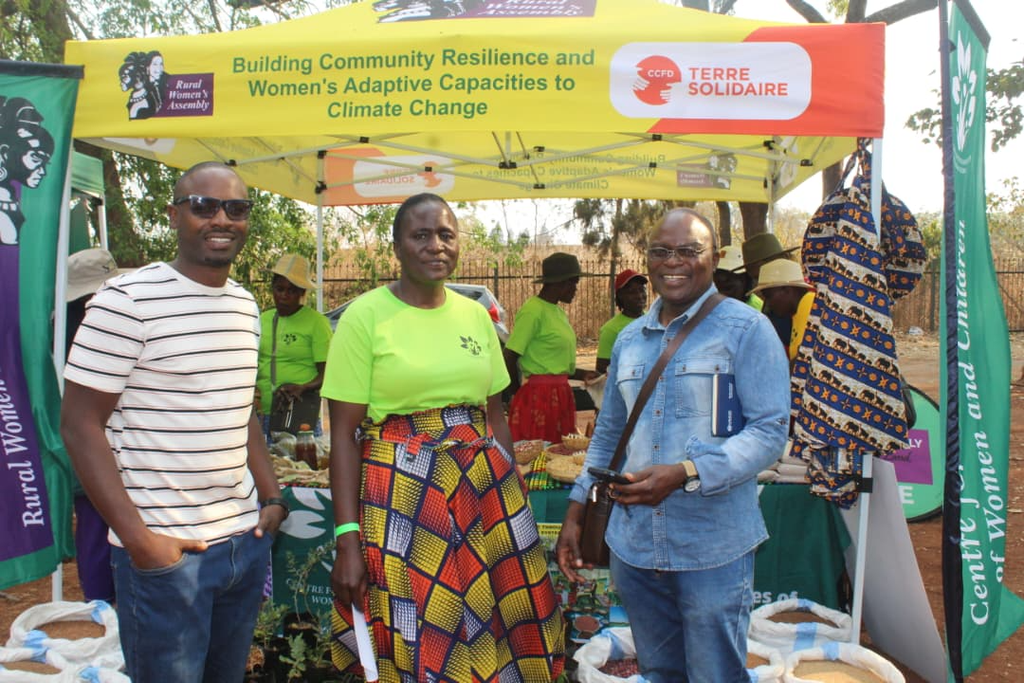
The festival kicked off with energy and purpose. While some CDWC delegation members including Christine Tangai, Junior Muguti , Tendai Mafuku and Jestina Chinamasa represented the organization in key dialogue sessions and policy presentations on Draft Seed Policy, the “Free Our Seed” campaign launch among others dialogues, Dorcas anchored the practical exhibition at their stall.
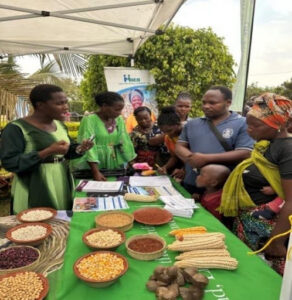
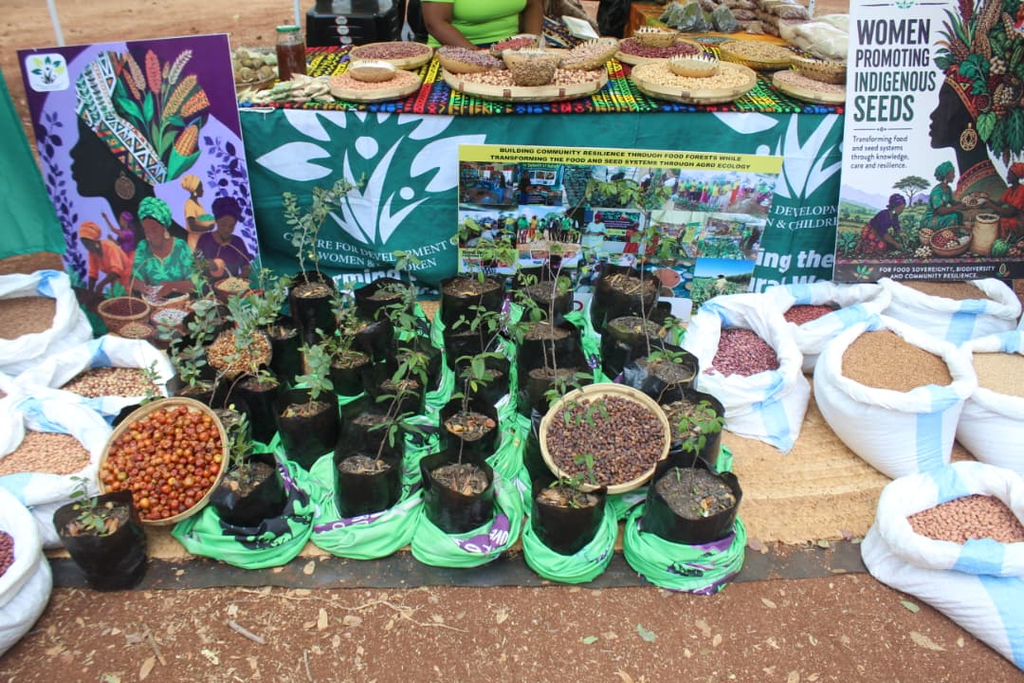
Grounding her work in the daily practice of agroecology, Dorcas specialized in showcasing indigenous fruit trees, resilient local seed varieties, and innovative value-added products derived from native flora. Her centerpiece was a rich, homemade chakata (hissing tree fruit) syrup. Decorated with authentic traditional crafts, the CDWC stall stood out across the festival grounds, drawing steady crowds of curious visitors, families, and photographers.
Through these indigenous foods, the exhibit powerfully demonstrated how producing and preserving traditional and indigenous crops is essential to transforming local eating habits and reclaiming our food systems from hyper-processed diets. By returning wholesome, nutrient-dense traditional foods to their rightful place on the plate, the display offered a tangible taste of food sovereignty in action.
”Visitors loved coming to taste our chakata syrup. Many parents brought their children to sample traditional flavors and indigenous fruits they had never tried before. Seeing their faces light up was wonderful, and that excitement translated directly into sales,” said Dorcas Munyanyi
By turning a wild, indigenous fruit into a sought-after commercial syrup, Dorcas demonstrated the immense economic potential locked within traditional knowledge and sustainable natural resource management. Building on this success, We hope to see our Rural Women Assembly in Zimbabwe stepping forward across the country to champion vital seed multiplication efforts, ensuring that indigenous seeds are multiplied, shared, and preserved from the grassroots up.
Sowing the Seeds of Financial Independence
For rural women farmers, access to fair markets and value-addition training changes everything. Through CDWC’s ongoing empowerment initiatives which equip women with practical skills in food processing, value addition, product packaging, and market linkage, Dorcas was able to transform local biodiversity into tangible household income. The financial return from the two-day festival was immediate and profound.
Dorcas highlighted that, the income she earned from selling bottles of chakata syrup and traditional fruit products directly funded school fees and new uniforms for her children ahead of the upcoming academic year.
Furthermore, using her profits, Dorcas navigated the festival’s seed-sharing networks to purchase high-quality, climate-resilient crop seeds that were missing from her home farm, ensuring her fields are ready for the upcoming rainy season hence securing seed sovereignty.
The festival affirmed that rural women are not merely subsistence growers, but key drivers of local nutrition, market economies, and biodiversity conservation.
To crown the experience, Dorcas won a competition hosted by PELUM Zimbabwe during the festival after answering a question on Facebook, taking home a new bag and an extra boost of joy.
Dorcas’s journey highlights why grassroots women need continued access to platforms for collective action, traditional seed systems, value-addition training, and direct buyer connections. When supported with the right knowledge and market access, women farmers do not just feed their households, they strengthen local food systems and build economic resilience from the ground up.
Returning home to Makoni District with new seed varieties in her bag, school fees secured in her pocket, and a revived sense of pride, Dorcas is ready to share her knowledge with her neighbours. Her story stands as living proof that when you invest in a rural woman, the harvest benefits the entire community.