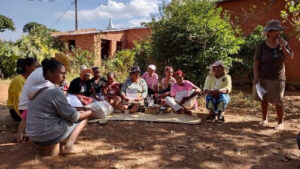
On the island of Rodrigues, where the land is shaped by the wind and the sea and where farming has long been part of everyday life, maize is much more than a crop. It is a food, a tradition, a source of livelihood, and increasingly, a symbol of the island’s journey towards food sovereignty.
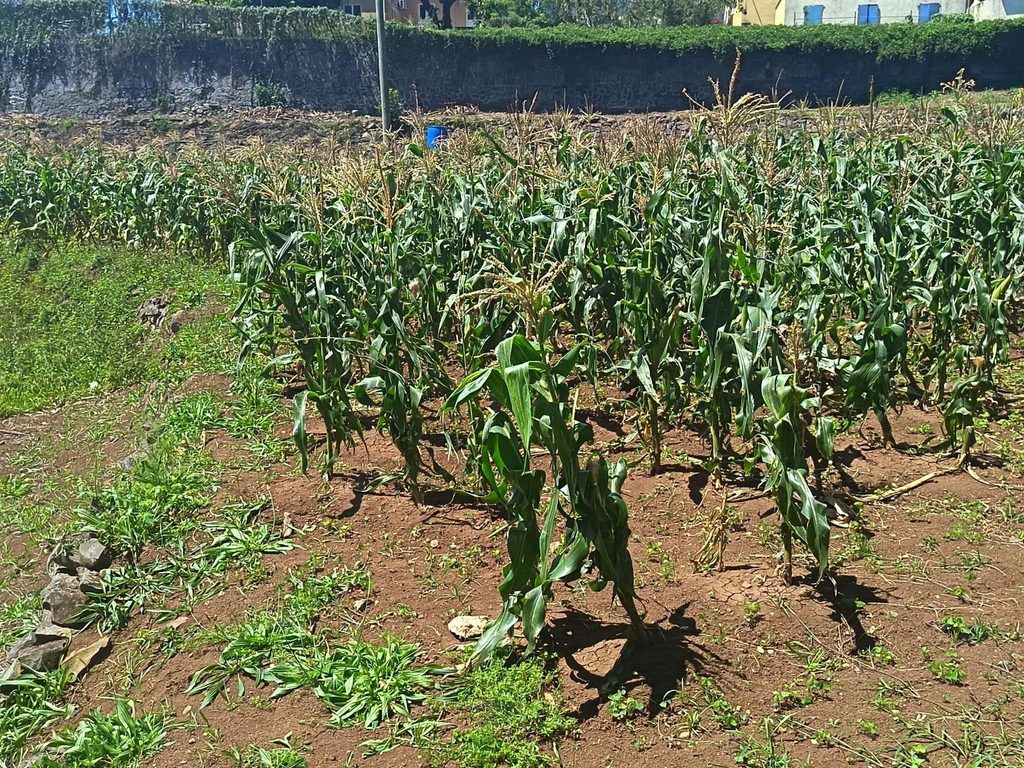
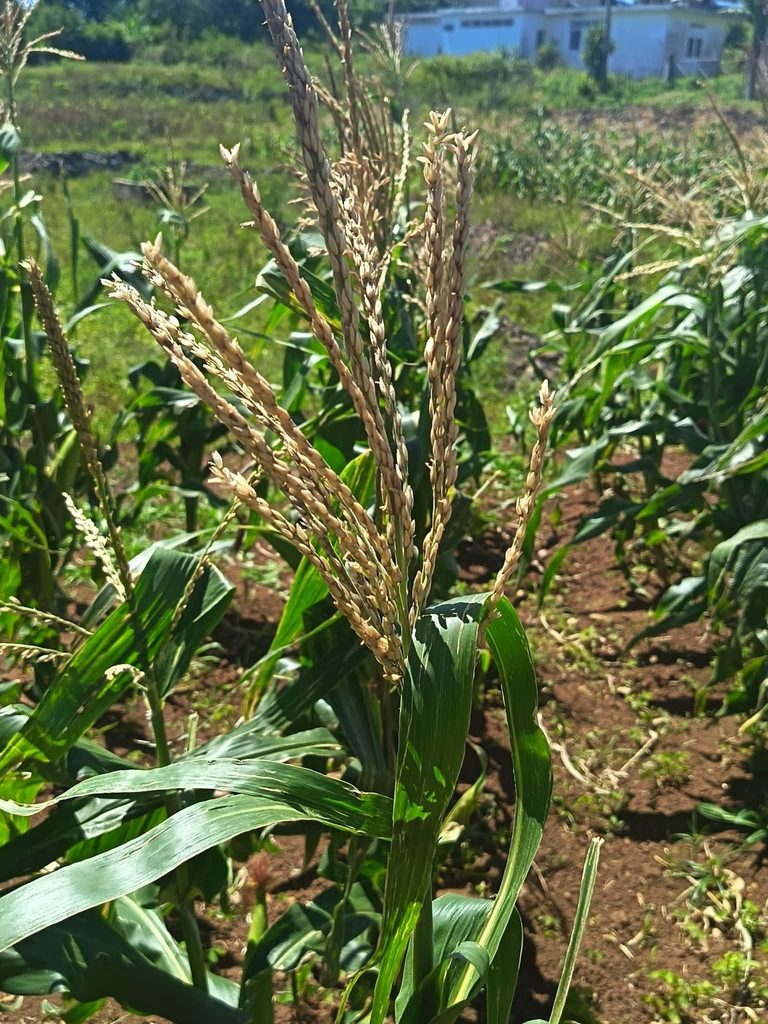
(Maize field plantation)
For generations, Rodriguan families have cultivated maize on small plots of land, often using simple tools and knowledge passed down from one generation to another. The maize fields may be modest in size, but their importance to the community is much greater than their physical scale suggests. In the hands of small-scale farmers, a handful of seeds can become food for a family, fodder for animals, and an important contribution to the local food system.
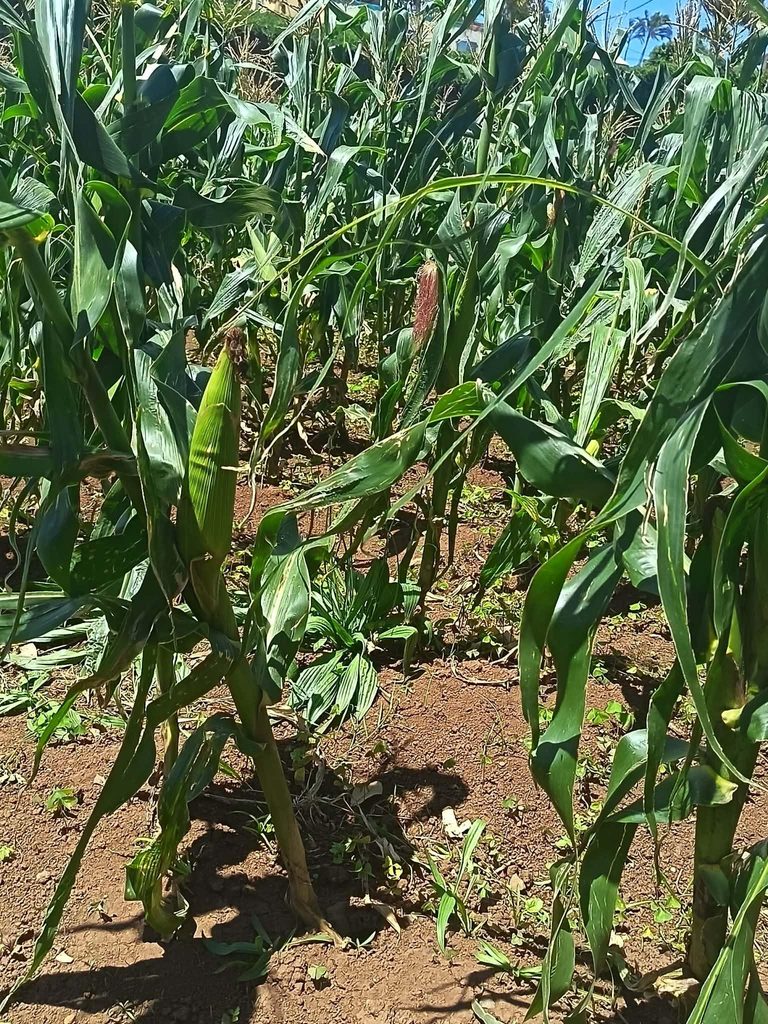
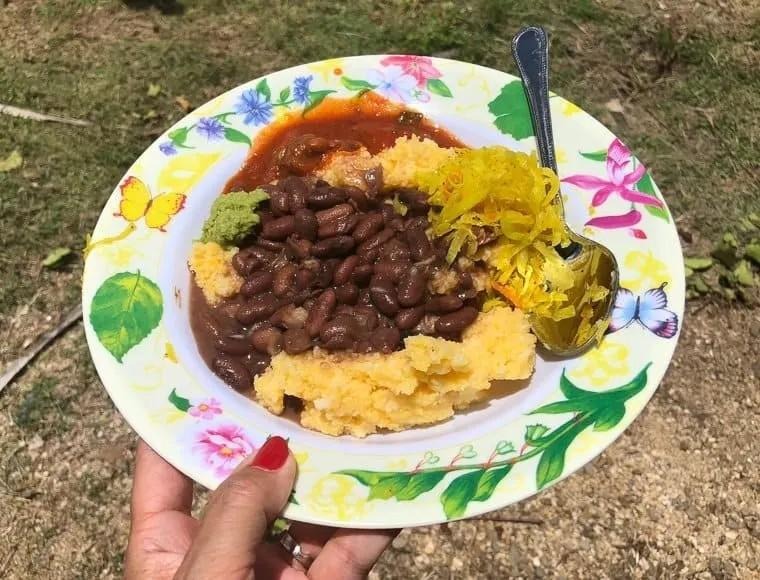
Maize has traditionally been an important staple in the Rodriguan diet. It is present in everyday meals and is transformed into different preparations according to family traditions and local tastes. Fresh or dried, ground or cooked, maize finds its way into several dishes prepared in Rodrigues. Each preparation tells a small part of the island’s food heritage.
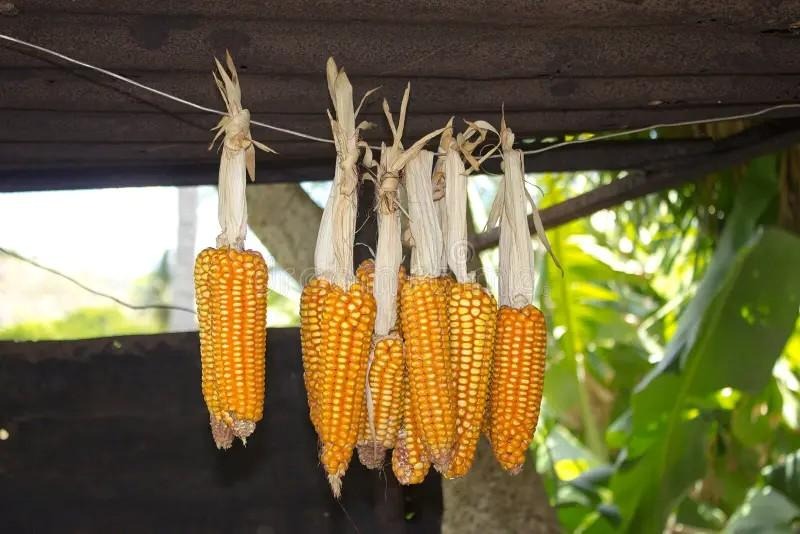
Maize when harvested is dried with their cobs. Some are preserved for the next planting season and the rest is grounded for cooking.
Behind these dishes lies the work of farmers.
A maize field in Rodrigues is often the result of careful observation of the land, the seasons and the weather. Small-scale farmers cannot rely on large machinery or extensive irrigation systems. They work with what they have: their hands, their tools, their seeds, their animals, and, most importantly, their knowledge of the land. This way of farming is closely connected to agroecology.
Agroecology is not simply about replacing one agricultural input with another. It is about understanding the farm as a living system. In Rodrigues, this can mean protecting the soil, making use of organic matter, recycling farm resources, diversifying crops, conserving water and maintaining the biodiversity that supports agricultural production. It also means valuing the knowledge and experience of farmers themselves.
On a small farm, nothing is truly isolated. Crop residues can become animal feed or organic matter. Animal manure can return nutrients to the soil. Different crops can be grown together or in rotation. Farmers can adapt their practices to the local climate rather than trying to force the land to follow an industrial production model.
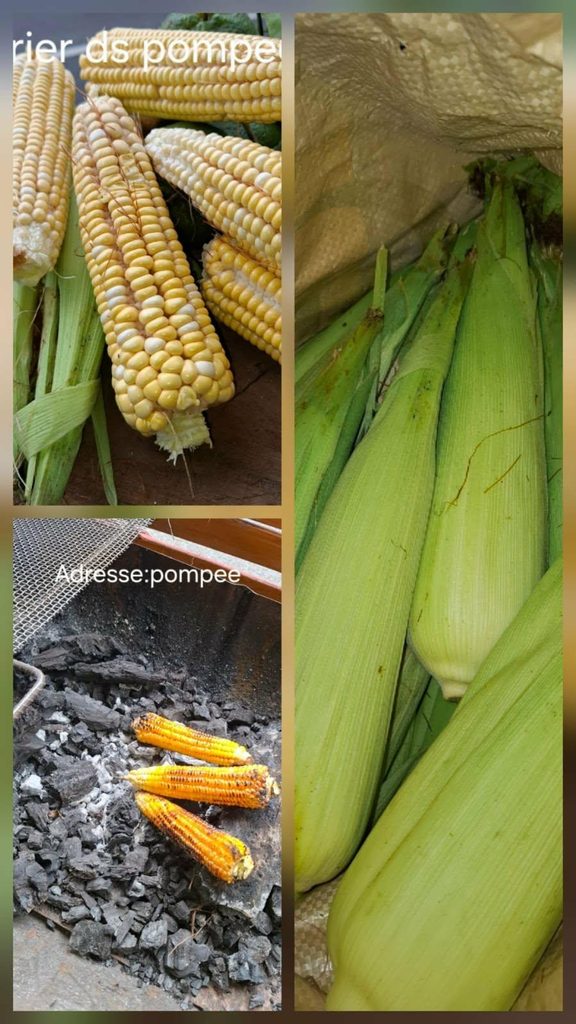
Grilled maize
Maize has an important place within this system.
Its value is not measured only by the quantity harvested. A maize harvest can reduce a family’s dependence on food brought from outside the island. It can provide food during difficult periods. It can support livestock production. It can preserve traditional recipes and strengthen the connection between people, land and food.
This is where maize becomes part of the larger story of food sovereignty in Rodrigues.

Ground maize and maize flour.
Food sovereignty is about more than having enough food. It also concerns the ability of communities to influence how their food is produced, what crops are cultivated, whose knowledge is valued, and how local resources are managed. For an island community, where dependence on imported food can be significant, strengthening local production can have particular importance.
Every locally produced maize cob represents more than a harvest. It represents a farmer choosing to cultivate the land. It represents seeds being planted rather than forgotten. It represents knowledge being passed to another generation. And when that maize is eaten at home, shared with neighbours or transformed into a traditional dish, the harvest becomes part of the cultural life of the island.
The story of maize in Rodrigues is therefore also a story about resilience.
The farmer standing in a small maize field may not think of their work in terms of global food systems or agricultural policy. They may simply be planting because the season has arrived, because the family needs food, or because farming is what they know. Yet these everyday actions collectively contribute to something much larger.
Food sovereignty is built from the ground up.
It can begin with a seed saved from one harvest and planted in the next. It can grow through a family maintaining a small plot of land. It can continue through a grandmother teaching a traditional recipe to her grandchildren. It can become stronger when farmers exchange knowledge, when young people take an interest in agriculture, and when local communities value food produced on their own island.
In Rodrigues, the maize plant can therefore be seen as a quiet protagonist in a much bigger story.
It does not grow alone. Around it are the farmers, families, animals, soil, rain, wind, seeds, traditions and landscapes that make up the island’s agricultural system. Its story is inseparable from the people who cultivate it.
The future of maize in Rodrigues will depend on keeping this relationship alive. Supporting small-scale farmers, strengthening agroecological practices, protecting local agricultural knowledge, encouraging young people to engage with farming and valuing locally produced food can all contribute to a more resilient food system.
And so, when the first maize shoots emerge from the soil, they carry with them more than the promise of a harvest.
They carry the memory of generations.
They carry the taste of Rodriguan cuisine.
They carry the knowledge of small farmers.
And they carry a possibility for the future — an island where the land continues to feed its people, where farming remains connected to culture and community, and where food sovereignty grows, one seed at a time.