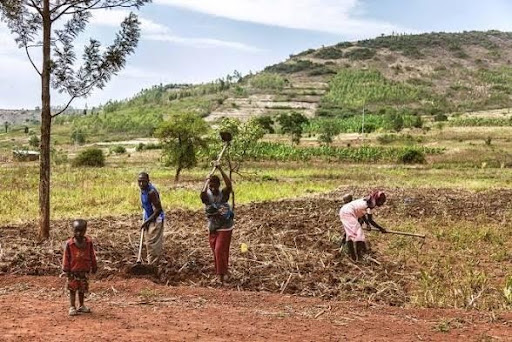
For generations, rural farmers have relied on traditional knowledge to produce food, preserve seed, manage livestock and cope with changing seasons.
Traditional farming practices remain an important part of Zambia’s agricultural heritage and continue to support the livelihoods of many smallholder farming households.
However, climate change is increasingly challenging the reliability of farming practices that communities have depended on for generations.
Unpredictable rainfall, prolonged dry spells, floods, rising temperatures, soil degradation and changing planting seasons are making agricultural production more difficult. For rural farmers who depend heavily on rain-fed agriculture, these changes can have serious consequences for household food security and income.
As much as traditional knowledge still matters, it should not simply be discarded.
Rural communities possess valuable experience in understanding local soils, seasonal patterns, indigenous crops, seed selection and natural resource management. Combining this knowledge with modern agricultural information can help farmers respond more effectively to changing climatic conditions.
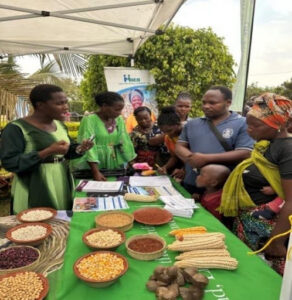
The Rural Women’s Assembly in Rufunsa District has embarked on a village-to-village outreach programme aimed at equipping farmers with practical knowledge on proper seed planting techniques.
This programme is spearheaded by Precious Shonga, bringing together women and men for practical demonstrations on how to prepare planting holes, including the recommended depth, height and spacing between holes.
Farmers were also encouraged to wait for the rains before planting, to ensure adequate soil moisture and improve the chances of successful crop establishment.
Such practical training is important because farmers need information that can easily be applied in the field. Rather than relying only on theoretical lessons, demonstrations allow farmers to see and understand techniques before using them on their own farms.
Farmers have traditionally used practices such as crop diversification, organic manure, intercropping, conservation of indigenous seed varieties and the use of locally available resources. These practices can provide a foundation for adapting to climate change when combined with appropriate modern techniques.
There is therefore a growing need for regular and practical climate-change training for rural farmers.
Organisations like RWA, working with farmer groups and other stakeholders, can help farmers understand how climate change affects crop production and what practical measures can be adopted.
Training can cover areas such as climate information, early land preparation, drought-tolerant crops, water harvesting, soil conservation, agroforestry, conservation agriculture, crop diversification and proper timing of planting.
Farmers can also be trained to recognise climate risks and use weather and seasonal forecasts when making decisions about planting. Access to timely climate information can help farmers avoid making costly decisions based on unreliable or outdated assumptions.
Water management should also be an important part of farmer training. With rainfall becoming less predictable in some areas, farmers need practical knowledge on conserving soil moisture, harvesting rainwater and protecting water sources. Simple techniques can help reduce the effects of short dry spells and improve crop survival.
Soil health is another important area. Continuous cultivation without adequate soil management can reduce soil fertility and increase vulnerability to drought. Farmers can benefit from training on the use of organic matter, crop rotation, mulching and other soil-conservation practices that help maintain productive farmland.
Training programmes should deliberately include women and young people, who play important roles in rural agriculture.
Women are often involved in crop production, food processing, seed preservation and household food security, while young people are increasingly important to the future of agriculture. Giving young people practical agricultural skills can also make farming more attractive as a livelihood and business opportunity.
Providing practical skills, like the way Precious Shonga is doing, climate information and access to agricultural services can help rural communities become more resilient.
Effective farmer training requires strong agricultural extension services such as transport, equipment, communication tools and up-to-date climate and agricultural information to reach farmers in remote areas.
Training should also be practical and conducted in local languages where possible. Demonstration plots and farmer field schools can allow farmers to see climate-smart techniques before applying them on their own farms.
Governments, civil society organisations, research institutions and the private sector can also play a role by supporting extension programmes, providing appropriate farming technologies and improving access to agricultural inputs and markets.
Climate change is not only an environmental issue. It is also a food-security, economic and livelihood concern.
Helping farmers prepare for these risks can therefore strengthen household resilience and reduce vulnerability.
Training rural farmers on climate change is therefore not simply about teaching new farming methods. It is about equipping communities with the knowledge and tools needed to protect food production, livelihoods and the future of agriculture in a changing climate.
By investing in continuous training, practical demonstrations and accessible climate information, rural farmers can be better prepared to adapt to changing weather patterns and build more resilient agricultural systems.