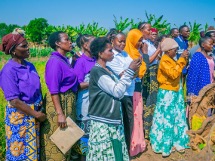
In a bold step toward climate justice and sustainable food systems, over 28 women from across rural Namibia came together in Windhoek for a week-long Feminist Climate Change and Agroecology School. The event, hosted by the Namibia Rural Women’s Assembly (NRWA) in partnership with the Economic and Social Justice Trust (ESJT), focused on equipping grassroots women with the tools, knowledge, and confidence to address the climate crisis through agroecology, indigenous practices, and feminist leadership.
The school brought together smallholder farmers, youth leaders, seed savers, and representatives from ministries, institutions, and climate organizations to share, learn, and build collective power.
Bridging Gender, Land Rights, and Climate Justice
The program opened with a warm welcome and a call to action by Agnes Tjimbundu and Nafi. Participants explored key themes such as gender equality, land rights, women’s access to finance, and leadership in decision-making. Facilitators from the Ministry of Agriculture, Water, Fisheries and Land Reform and Agribank led discussions on policies, challenges, and opportunities for women in agriculture.
“Many rural women are excluded from owning land and from critical farming resources,” said one facilitator. “We must build systems that put women at the centre of land, food, and water governance.”
Namibian Rural Women’s Manifesto: A Declaration of Demands
A major milestone of the gathering was the collective development and adoption of the Namibian Rural Women’s Manifesto. Through participatory group work and reflective dialogue, women outlined their shared demands for access to land, financial inclusion, skills development, and leadership representation.
“This manifesto is more than word sit’s a movement,” said participants. “We are standing up to say: we know what we need, and we are ready to lead.”
Agroecology in Practice: Seeds, Soil, and Sovereignty
Participants received hands-on training in agroecological farming methods, including crop diversification, agroforestry, water harvesting, organic composting, and seed saving. Agroecologist Stephan Eins facilitated a dynamic workshop blending technical knowledge with indigenous practices.
The learning continued on-site at Krumhuk Farm, where women witnessed successful models of regenerative farming, livestock integration, and value addition. This practical exposure inspired deep conversations around food sovereignty and climate resilience.
Evening sessions provided space for seed exchanges, story-sharing, and open dialogue around the challenges women face especially in the context of drought, human-wildlife conflict, and land degradation.
Building Community-Driven Climate Solutions
The final days of the school focused on future planning. Participants engaged in discussions around early warning systems, disaster preparedness, and community-based adaptation initiatives. Presentations by the Namibia Weather Services provided critical insights into support systems.
“We must connect local knowledge to national planning. Women on the ground are already adapting we just need recognition and resources,” said one speaker during the climate adaptation session.
From Learning to Action
The week concluded with a teambuilding braai and a renewed sense of sisterhood and solidarity. Participants left not only with practical skills but with a vision for transforming their communities rooted in agroecology, land justice, and feminist organizing.
As NRWA continues to support grassroots women, the lessons and leadership from the Feminist Agroecology School will ripple across Namibia cultivating change from the soil up.
Voices from the School
“I now understand my rights to land and the power of working with nature. We are not victims we are leaders.”
– Participant from Erongo
“This school gave us tools to respond to drought, pests, and even mining threats. We will not be silent anymore.”
– Young woman from Oshikoto