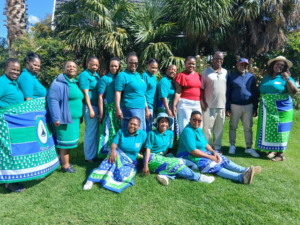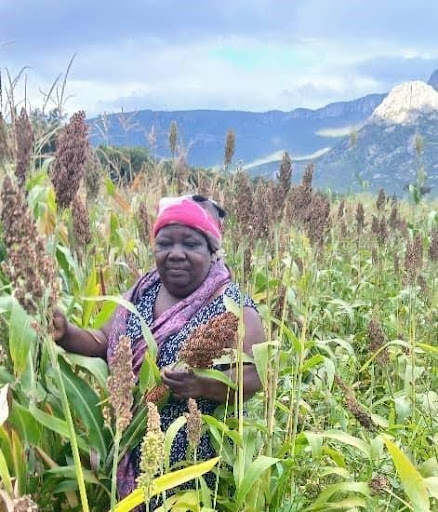
Gogo Diana Sedze is one of the farmers championing agroecology in Nyanga District, demonstrating that sustainable farming is not only possible but essential for building resilient food systems, restoring ecosystems, and improving community well-being. As a member of the Zimbabwe Smallholder Organic Farmers Forum (ZIMSOFF), she has become a passionate advocate for agroecology, inspiring other farmers to embrace farming practices that work in harmony with nature while improving livelihoods and nutrition.
Like many farmers in Nyanga, Gogo Sedze once operated within a production system focused largely on cash crops such as citrus fruits and sweet potatoes. While these crops generated income, she began to recognize the hidden costs associated with monocropping and dependence on external inputs. Soil fertility was declining, biodiversity was being lost, and communities were becoming increasingly disconnected from nutritious traditional foods. Despite living in a productive agricultural area, many households continued to experience poor dietary diversity and hidden hunger.
Through her involvement with ZIMSOFF and participation in farmer-to-farmer learning exchanges, Gogo Sedze discovered agroecology as a pathway to healthier soils, improved nutrition, stronger biodiversity, and climate resilience. She learned that sustainable food systems are built not only on production but also on the regeneration of ecosystems, the conservation of indigenous knowledge, and the empowerment of farming communities.
Determined to put these principles into practice, Gogo Sedze transformed her farm into a living example of agroecology. Today, her farm integrates agroforestry, fish farming, traditional grain production, soil and water conservation, biodiversity restoration, and water harvesting. Each component complements the other, creating a diverse and resilient farming system that enhances productivity while reducing dependence on costly external inputs.
One of the most innovative aspects of her work is her commitment to water conservation. Although Nyanga receives high annual rainfall, much of this water is often lost through runoff, contributing to soil erosion and reducing moisture availability during dry periods. Through carefully designed contour trenches and water harvesting systems, Gogo Sedze captures and stores rainwater, protecting the soil and ensuring moisture remains available long after the rainy season has ended.
“Many people questioned why I was promoting water conservation in a district that receives so much rainfall,” says Gogo Sedze. “What they did not realize is that rainfall alone does not guarantee food security. If we do not conserve water, protect our soils, and work with nature, we lose valuable resources. Agroecology has taught me that the solutions we need already exist within our communities in our seeds, our knowledge, our land, and our collective wisdom.”
The results are evident across her farm. What was once a conventional farming system has become a thriving landscape of traditional grains, vegetables, fruit trees, indigenous species, and fish ponds. Soil fertility has improved, biodiversity has increased, and her family now enjoys a more diverse and nutritious diet. The farm has also become a learning site where farmers visit to observe agroecological practices, exchange experiences, and gain practical knowledge on sustainable farming.
Beyond her own farm, Gogo Sedze is helping to build a growing movement for agroecology. She actively shares knowledge with fellow farmers and advocates for farming systems that protect ecosystems, promote nutrition, strengthen resilience, and reduce dependence on expensive external inputs. Her vision is to transform her farm into a centre of excellence where farmers, students, policymakers, and practitioners from Zimbabwe, Africa, and beyond can learn about agroecology and its transformative potential.
Her message to fellow farmers is simple yet powerful:
“Don’t wait until you have money to start. Begin with what you have. Agroecology is our inheritance and our future. It is about sustainability, restoring our soils, protecting our environment, and securing food for future generations.”
Gogo Sedze’s journey demonstrates that agroecology is far more than a set of farming practices. It is a pathway to food sovereignty, improved nutrition, environmental restoration, climate resilience, and dignified livelihoods. Through her leadership and example, she is showing that when farmers work with nature, they can regenerate their landscapes, strengthen their communities, and build a more sustainable future for generations to come.