A SCHOOL THAT BECAME A MOVEMENT
The Feminist Agroecology School strengthened women’s practical understanding of agroecology, biodiversity, indigenous seeds, soil health, climate change and food sovereignty. Practical learning included Bokashi, organic fertilizers, natural pest control, agroforestry and climate adaptation. The participant evaluation identified the practical sessions as the most useful because the skills could be applied directly in communities.
WHAT HAPPENED AFTER THE SCHOOL?
Sisters returned to their respective communities equipped with knowledge and immediately began sharing it with other sisters. The result is a growing chain of action: knowledge is being transferred, practices are being tested, and women are developing practical responses to climate and food challenges.
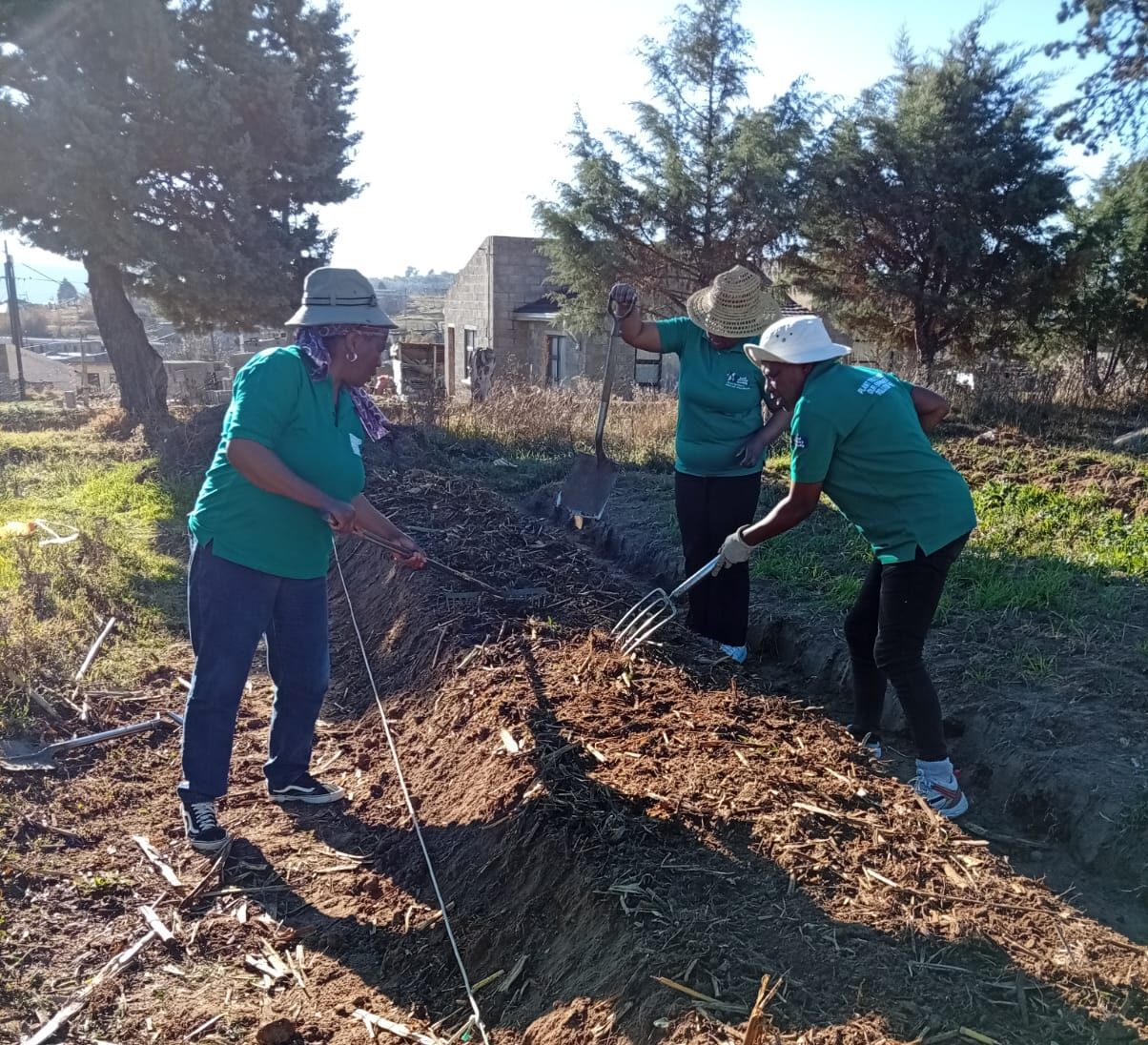
| BOTHA-BOTHEREADYING THE GROUND New plots are being prepared using climate-friendly approaches as communities anticipate the coming farming season and climate pressures, including El Niño. | LERIBEPLANTING FOR FOOD SOVEREIGNTY Sisters planted butternut while applying safer, climate-friendly methods learned from the school turning training into food production. | HA-SETHOBOKASHI IN ACTION Bokashi is being used as a practical climate-adaptation and food-sovereignty measure, bringing organic soil management into everyday farming. |
WHY THIS MATTERS
These actions show that women are not only receiving knowledge they are becoming knowledge sharers and solution-builders. The school’s impact is now visible beyond the
training space, in the everyday decisions women are making about soil, crops, climate resilience and food production.
THE ROAD AHEAD
HRWA Lesotho will continue documenting these women-led actions, following progress in the fields and sharing lessons that can inspire wider adoption of practical agroecological solutions. The next chapter is about sustaining the momentum and showing what happens when knowledge is put into practice.