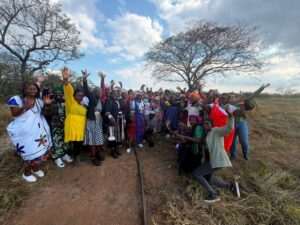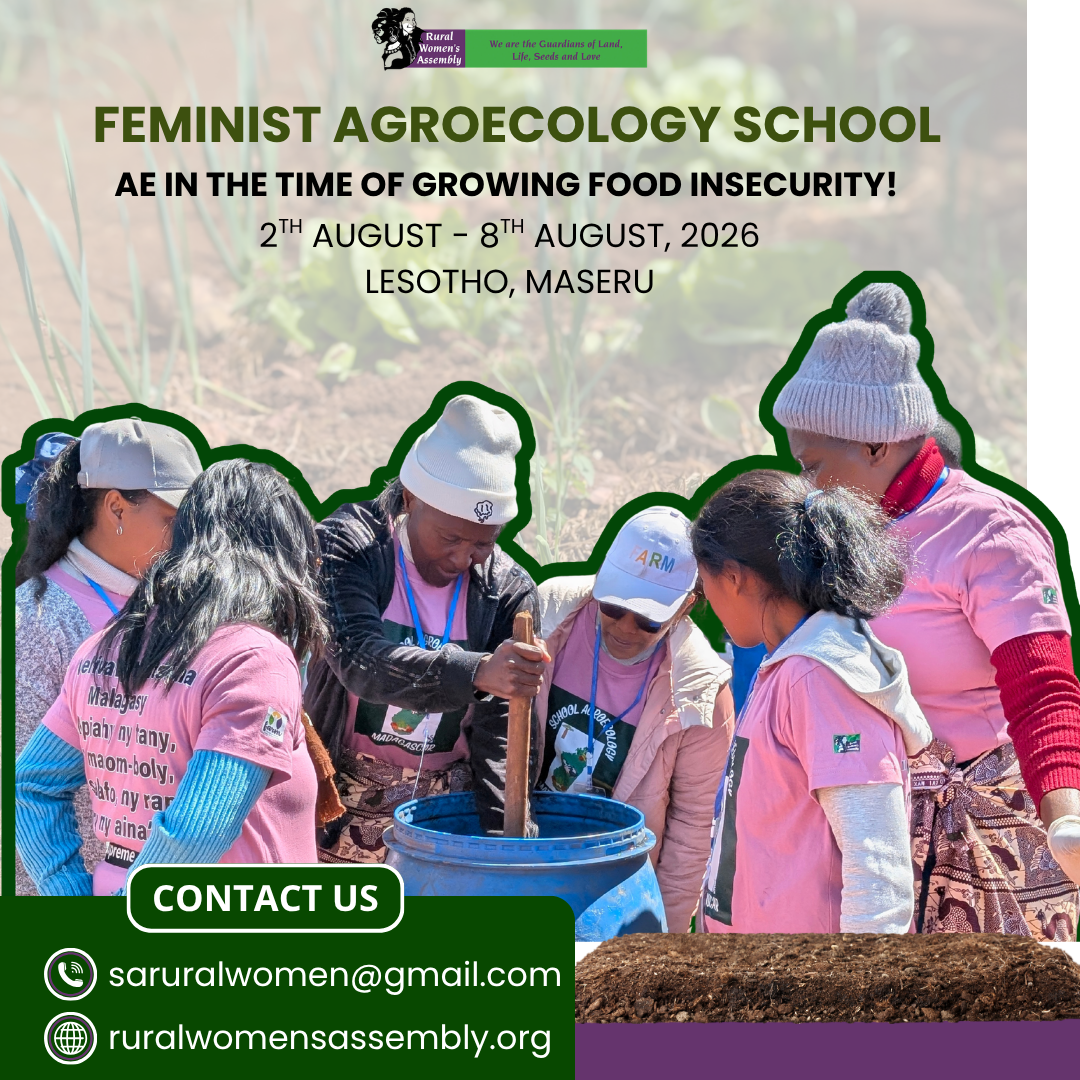
From 2 to 8 August 2026, rural women, farmers, activists and agroecology practitioners from across Southern Africa will gather in Lesotho for the Rural Women’s Assembly 5th Feminist Agroecology School. This year’s school will be held under the timely theme, “Agroecology in the Time of Growing Food Insecurity.” The school comes at a moment when food insecurity is becoming an everyday reality for millions of people across the region. Rural communities are facing prolonged droughts, unpredictable rainfall, floods, declining soil fertility, rising food prices and the increasing cost of seed, fertiliser and other agricultural inputs. For rural women, these challenges are deeply felt because they remain at the centre of food production for families and communities.
Despite carrying this responsibility, rural women are often excluded from decisions concerning land, seed, agricultural policies and food systems. The Agroecology School therefore serves as a space where women can strengthen their knowledge, share experiences and build collective strategies for confronting hunger, climate change and the systems that continue to undermine their control over food production. The school approaches agroecology as a pathway towards food sovereignty, climate resilience, women’s autonomy and healthier communities. Participants reflect on the relationship between women, nature and food production, while examining how industrial agriculture creates dependency on commercially produced seeds, fertilisers, pesticides and other costly external inputs.
Practical learning remains at the heart of the school. Participants will have opportunities to exchange knowledge on seed selection, seed multiplication, soil improvement, composting, organic fertiliser production and biological pest control. They will explore how locally available materials, including animal manure, crop residues, leaves, kitchen waste, chilli, garlic, onion and other plants, can be used to improve soil fertility and manage pests without exposing farmers, consumers and the environment to harmful chemicals.
Participants also examine the policies and laws affecting farmers’ rights to save, use, exchange and sell their seed. They will discuss the importance of community seed banks, seed exchanges, traditional knowledge and collective advocacy in resisting policies that increase corporate control over seed. The school will also strengthen awareness of instruments that recognise and protect farmers’ rights, including the United Nations Declaration on the Rights of Peasants and Other People Working in Rural Areas.
In a time of growing food insecurity, agroecology offers hope rooted in the soil, carried through seed and strengthened by the collective power of rural women.