
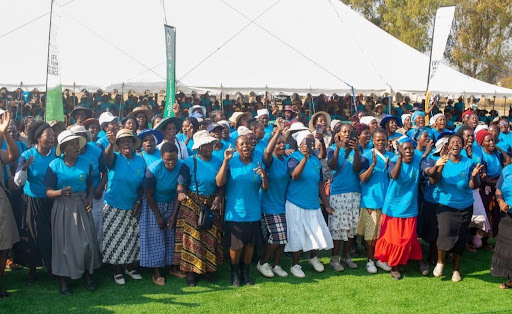
The Rural Women’s Assembly (RWA) Zimbabwe Chapter, through Women and Land in Zimbabwe (WLZ), celebrated its tenth anniversary at the Annual National Meeting held from 31 August to 2 September 2026 in Chegutu District. The gathering brought rural women together to reflect on their achievements, share experiences and strengthen their collective voice, marking a decade of organizing, solidarity and advocacy for rural women’s rights.
Under the theme “Honoring Rural Women’s Knowledge and Power: Land Rights, Food Sovereignty, and Climate Justice”, the meeting created space for women to celebrate progress, discuss challenges and identify solutions. It recognized the knowledge and leadership rural women bring to farming, natural resource management and community development, while highlighting their right to influence decisions affecting their lives.
Rural women from all 28 program districts participated alongside government representatives, traditional leaders, civil society organisations and development partners. Regional sisters from Mozambique, Zambia, Botswana and Kenya joined the gathering, strengthening connections across borders. Their participation reinforced the solidarity that connects rural women facing similar struggles over land, livelihoods, inequality and climate change.
WLZ National Coordinator presented the organization’s work and reflected on the theme. She recognized rural women as farmers, producers, knowledge holders and community leaders. This provided a foundation for discussions centred on women’s experiences and the importance of strengthening their collective power.
Five women from Shurugwi, Makonde, Makoni, Gweru and Gwanda shared testimonies about changes in their lives. They explained how rights awareness, training, collective organising and solidarity had strengthened their confidence and livelihoods. Their stories demonstrated that secure access to land supports more than agricultural production: it provides a foundation for dignity, economic independence and participation in household and community decisions.
A farmer from Shurugwi described her journey towards more secure access to land and stronger farming activities. A woman from Makonde explained how she developed farming into a business, processed and sold agricultural products, and drilled her own borehole. These experiences showed how access to land, water and knowledge can expand women’s opportunities and strengthen their ability to support their families.
From Makoni, another woman shared how she gained confidence to speak in community discussions and assist others facing land challenges. A participant from Gweru described rebuilding her life after gender-based violence through solidarity and livelihood activities. A farmer from Gwanda explained how training and peer learning encouraged her to diversify production and explore markets for surplus produce.
Together, these testimonies highlighted the value of safe spaces where women can speak openly, learn from one another and build supportive relationships. Discussions also explored agroecology, indigenous seeds, access to finance and markets, appropriate rural technologies and the inequalities that continue to limit women’s choices.
On the final day, the Guest of Honour, Minister of Women Affairs, visited Chivero Green Hub. She was accompanied by Deputy Minister, Permanent Secretary and local Member of Parliament. Traditional leaders and invited guests also participated. Before touring the five-hectare Village Business Unit, the delegation met WLZ staff and hub members. The delegation toured greenhouse and open-field production, sunflower and soya oil-processing facilities, and mushroom production. These activities demonstrated how women are combining food production with value addition and enterprise development.
The day’s programme provided space for rural women to present concerns directly to decision-makers and for duty bearers to respond. Bringing women’s experiences into these discussions reinforced the meeting’s focus on voice, leadership and accountability.
For RWA Zimbabwe, the anniversary recognised collective achievements while renewing commitment to the work ahead. Through participating organisations, including WLZ, the chapter continues to strengthen solidarity and advance land rights, food sovereignty and climate justice. The gathering affirmed rural women’s determination to organise, defend their rights and shape their future.


