

The Rural Women’s Assembly (RWA) Zambia has shared its experiences in grassroots organizing and movement building at the fourth Women’s Climate Assembly (WCA), held in Yaoundé, Cameroon, from 5 to 8 October 2026.
Represented by Thandiwe Banda, RWA Zambia joined more than 75 women from across West, Central and Southern Africa at the gathering held under the theme “Our Lands, Our Voices, African Women United for Reparations and Climate Justice.” The assembly provided a platform for women’s organizations to exchange experiences, strengthen solidarity and explore collective approaches to addressing climate change and environmental challenges affecting communities across Africa.
Appearing on a recent television program to discuss governance with delegates, Rural Women’s Assembly representative Thandiwe Banda highlighted the vital role and 17-year journey of the movement across Southern Africa.
“Rural women’s assembly is not an NGO,” Thandiwe explained, describing it as a dynamic collective of small-scale farmers, peasants, women farm workers, fisherwomen, and landless women working together to advance land rights, food sovereignty, climate justice, and women’s leadership. The movement champions several core messages, encapsulated by slogans such as “Guardians of land, life, seeds and love,” “One woman, one hectare,” and “Rural women say no to GMOs”.
Thandiwe emphasized their firm stance against gender-based violence and land grabbing, asserting, “Africa is not for sale, our seeds, our heritage, nothing about us without us, power to the rural woman”.
Thandiwe Banda
Reflecting on key milestones over the past 17 years, Thandiwe pointed to the organization’s recent receipt of the prestigious Right Livelihood Award from Sweden for organizing 178,000 rural women. Additional achievements include youth-led capacity building on climate and land issues, training 1,000 women in feminist Agroecology, establishing 24 seed multiplication sites, and helping ten previously excluded women secure land ownership through cross-border mutual aid and healing circles. Highlighting why feminist approaches are central to their mission, Thandiwe noted a fundamental shift in purpose: “For a long time, we have been saying that we were taught to grow food for our husbands to sell. Now we are not saying that now. What we are saying now is that we grow food for our children to live”.
A key highlight of RWA Zambia’s participation was a teach-in session on “Growing Our Organisation and Our Movement,” conducted in collaboration with Nous Sommes La Solution. The session focused on how women can build collective power through grassroots organization, community participation and sustained movement building.During a panel discussion on growing national and sub-regional grassroots movements, participants sought to understand RWA’s organizational structure, how information reaches grassroots members, how decisions are made and how the movement expands its membership.
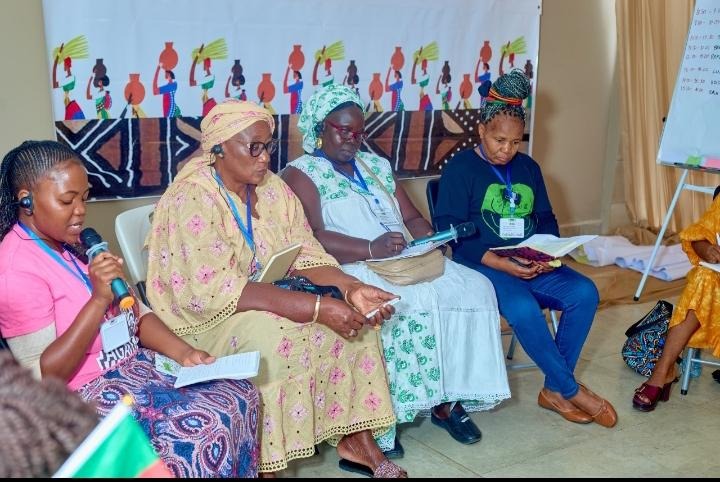
RWA Zambia’s experiences generated interest among participants, who identified several approaches they would like to adapt within their own organizations.
RWA Zambia’s participation also contributed to broader discussions on the challenges women face in defending their livelihoods, territories and natural resources.
The assembly underscored the interconnected nature of these challenges and the importance of ensuring that women have a meaningful voice in decisions affecting their communities.
In Strengthening Grassroots Action in Zambia the assembly identified continued grassroots mobilization between regional gatherings as an important step towards building a stronger African climate justice movement.
Key areas of focus included strengthening community-level structures and communication, investing in feminist political education, developing women’s leadership and promoting agro ecological systems to help communities adapt to climate change.
For RWA Zambia, these discussions offered opportunities to draw lessons from other African movements while sharing its own experiences in organizing women and strengthening collective action.
RWA Zambia’s participation in the 2026 Women’s Climate Assembly reaffirmed the importance of grassroots organizing, knowledge sharing and regional solidarity in advancing women’s climate justice struggles.
The experience highlighted the need to translate discussions into practical action, strengthen women’s leadership and ensure that rural women remain central to decisions concerning land, water, seeds and the environment.
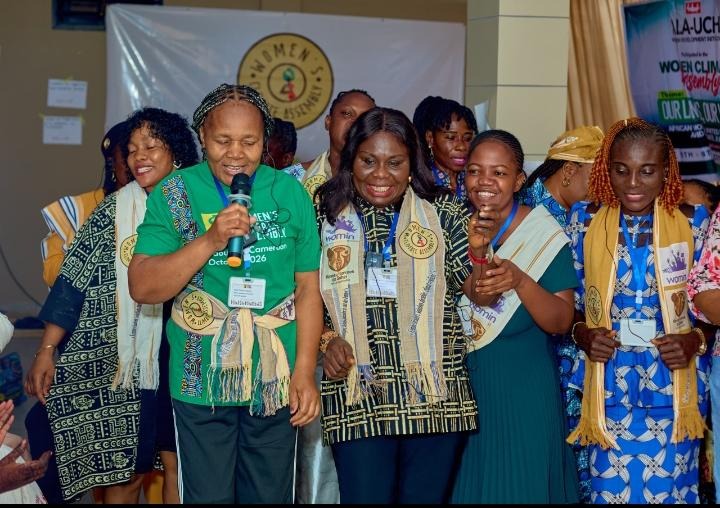
As climate-related challenges continue to affect communities across Africa, RWA Zambia’s engagement at the assembly provided an opportunity to strengthen connections with other women’s movements and contribute to a shared vision of climate justice rooted in community action and women’s voices. Our lands, our voices: building collective power for women’s climate justice.


Pingback: RWA Southern Africa Newsletter – November 2026 – Rural Women's Assembly